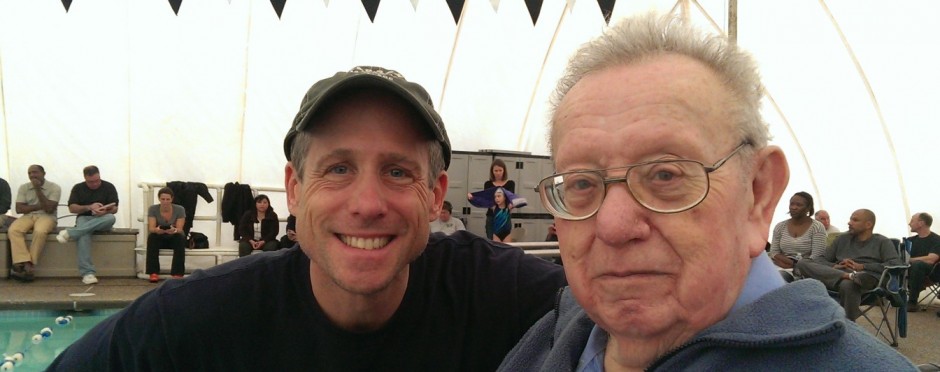
The Fall

For Yom Kippur every year, I taper off caffeine to avoid withdrawal headaches and irritability. Let’s face it — the day is tough enough already. I do this even though a part of me takes pride in my ability to harness it to keep up the pace of my life. It’s this part that has me start my early pre-workout 5:30am routine with an espresso shot, a device I use to coax myself to emerge from bed on freezing and dark freezing January mornings (and now March ones). The part that knows while water is healthier, coffee is tastier and acts faster. So, after giving in to that part of me most of the year, I need to ease back in the early fall. I switch from all caffeine, to about half-caf, to only a little, finally to almost zero.
The added upside is that caffeine turns out to be a close chemical cousin of Ritalin. So for a short time after the high holidays every year when my system is basically starting from zero, it clarifies my concentration and calms me. No, really.
At some point, I will give up this rite, along with fasting. Like I said, the day is tough enough already. This will be one of the privileges of getting older, I suppose.
For my father, however, abandoning Yom Kippur is not a privilege – it’s a challenge. He always wants to prove that he can do things his way even if they are exactly the opposite of what he should be doing. This DNA sequencing is part of why he is still alive at age 92, after all. So at age 92, he fasted this year. Why wouldn’t he? He is stubborn, my father.
Sometimes though, conventional wisdom actually is right. It was this time. He got weak, fell while reaching for something while getting dressed, bounced off the corner of his bed, crashed into the floor, and fractured his hip.
Some hours later, I was sitting on the couch after attending a break-the-fast party at a friend’s house and scanning my phone for the first time that day. It was about 9:30pm. The rest of my family was upstairs in bed already. By then, my father had been on the floor since 2pm. Although he has a “I’ve fallen and can’t get up” neck pendant that his community provides him, he didn’t wear it. As I said: stubborn. He also has a cord in the bathroom not 10 feet from where he fell that he could have pulled. That didn’t occur to him either.
But he also was too stubborn to just stay there. After 3 excruciating hours on the floor, he managed to crawl the 50 feet over to his desk so that he could reach his iPad to send an email for help. Then, somehow he pulled himself up high enough next to his desk to pull down his iPad and use it to start sending emails to my brother and me letting us know he was on the floor.
Several hours, and a phone call from my brother later, I saw the messages. As I mentioned in an earlier post about technology we’ve deployed for my dad, we have a camera deployed in his apartment that points to the front door. However, we can also see most of the apartment, including the area next to the desk. That was where I saw my father was laying face down when I checked it.
My father lives 15 minutes away in a community where there is plenty of help. I called the front desk there to let them know what had happened and to ask them to send someone upstairs. They did so right away, which is yet another reminder of why I’ve been so happy that my father doesn’t live in the house he insisted on staying in for years after my mother died. Sometimes I have anxiety dreams about trying to manage everything for him, but he still lives there.
In this case though, it was a question of just driving over. By the time I arrived, the front desk had called an ambulance. I would describe the condition he was in when I walked in his front door, but the readership here is small enough and I’m not trying to scare more of you off. Suffice it to say that when an incontinent man falls while getting dressed and then crawls across the floor in extreme pain, it is not pretty. He looked up at me and said, “Peter, I need your help getting up.” I gently let him know that this was not going to happen and that an ambulance was on its way. It was obvious that he had a broken bone. The only question was how many, and how seriously.
A short time later, the Framingham firefighters and an ambulance arrived. (Brief rant: why do the firefighters need to come? There is no fire. The EMTs are trained paramedics. It feels like marketing.) Almost instantly my father ceased existing a human being with a story, a background and a soul. Instead he became “elderly-male-who-fell-and-probably-has-dementia-and-so-many-other-problems.” It happened almost immediately. As soon as the EMTs tried to ask him questions to gauge his mental acuity, but asked them into the ear where he doesn’t hear well, I knew what I would be spending the rest of my night, and probably October at least, guarding against. He had been transformed.
I too had been transformed. Usually I am a sandwich generation father and son, straddling the fine line between caring for an elderly parent and trying to be the best parent for my children I can be. Sometimes though, I need to be one or the other. This was one of those moments.
As they wheeled him out, I packed the belongings I thought he would need. iPad. Charger. Worn-out Sony headphones he likes so much. Clean pajamas. His favorite slippers (in hospitals you get those anti-slippery socks). Both pairs of glasses. Hearing aid and batteries. A few pictures. Then I followed the EMTs out, and to the hospital. Luckily, I’d had my first post Yom Kippur cup of coffee and was fueled up for a long night.
The Observation

Because it’s mid-Yom Kippur and I am in the part of the Sandwich Generation with only one parent, I am thinking about my mother today. Last night at services I looked to my right at my children and flashed briefly to just how much they’ve grown in the 4 years since she passed away. If she could observe them, she’d be proud of them. Maybe she would be a little proud of how I’ve done as a father with, let’s face it, no formal training whatsoever.
Over the choir’s chanting, I flashed to a recurring dream I’ve had over the past couple of years. I am a recurring anxiety dream kind of person. My usual standards are (a) I’m trying to make a plane but every step just seems to take a lot longer than usual, like I’m running in molasses, (b) I somehow didn’t study all semester and the test is in 24 hours or, another variation on this topic, (c) I’m back in business school and skipped most of last semester, so this semester I am really in trouble if I want to graduate. Oddly, I recently conquered (c); somehow mid-dream I’ve been remembering that Stanford was a zillion years ago and that this can’t be reality.
In this particular dream, I’m standing in the a dream-altered version of the kitchen of my childhood home. It is smaller, more cluttered (which you would not think possible if you ever visited my mom’s kitchen), the light a little more slanted and muted. My mother is alive. Her death turns out to have been a big medical mistake and she’s back. In the dream this is reality, not realization; as I walk into the house, I accept that this new version is just how things have been for some time now.
“Reality” also means that my father has moved back in with her into my childhood home and they have fallen back into the pattern where as a unit, she is caring for him.
I think I flashed to this because having pondered how proud my mother would be of her grandchildren, I know she would be amazed at my father. It’s hard to remember the days before he became a widower and in his late 80’s managed not only to survive but to carve out a life. But in the dream and last night in the synagogue, I realize that if she were still alive and could see it, it of course wouldn’t have happened. By observing it, she would change it. It’s the human application of the Heisenberg principle from physics: observing momentum at the atomic level alters it.
In the case of my parents, this maxim holds. My father told me a story a few weeks ago about a planned Alaskan cruise that they canceled abruptly the morning of their flight to Seattle because she suddenly didn’t feel well. Around and observing her constantly he didn’t divine what I surmised not long after she passed away: she spent the last several years of life struggling with illnesses, with anxiety, suffering in near silence. It was just like her to make you worry more about her more by telling you not to worry about her. Now, with distance, he recognizes that she must have spent weeks fearing having to let on to him that she wasn’t well enough to make that trip. Which then altered what happened.
As a caregiver, observation frequently leads to corrective action. It has to. As a parent, there is a balance is between observing our children’s reality and stepping in, no matter how good the intentions, to change it. Knowing when to do which is something for which, as previously mentioned, I did not receive formal training. I must have skipped that semester at Sandwich Generation dad class. Now as in my dream, I suppose I am in some trouble now as my daughters edge closer to adolesence. At least now I know to watch out for doing both at the same time.


 The Sandwiched Man
Recent Comments