The Cast
The Roadblock

Last time in my series about my dad, I wrote about the wonderful nurse who took care of my father the night he was admitted to Leonard Morse Hospital in Natick after he broke his hip. Leonard Morse is tucked away on the short road from town to what residents euphemistically call “South Natick”, which is code for “Not Quite Wellesley”. I live in Wellesley, which is Not Quite Princeton, which is Not Quite Oxford, and so on. I don’t take this stuff very seriously – but people in South Natick do.
I had gone home for the night, expecting a long day tomorrow when they performed his surgery. His break was partial, meaning that the bone was broken and the socket was intact. A total break was the catalyst for my mother’s very rapid decline 6 years ago. Much more on this later. Suffice it to say that this injury is painful, debilitating, and takes a very strong will to overcome. My mother had many gifts, but after many years of unhappiness (and smoking), a strong will wasn’t among them. She lasted 3 weeks.
My father is different. Death has come for him many times, and each time, he has refused the invitation. I’m guessing that Death’s feeling pretty exasperated by now and wondering what he has to do to get this guy to go along with him already. My dad’s version what happened to her includes a strong sense of paranoia about how doctors and hospitals kill people — which they do — but also that she gave up. Already that night he told me that it was not going to happen to him and that after the surgery, he would work hard.
Partial hip replacements, even for the elderly, generally take a little over an hour and are not particularly dangerous procedures. My brother just had a full replacement and wasn’t even under general anesthesia. Leonard Morse, aside from anchoring the road to South Natick, is a hip replacement factory for the elderly who live in and around Metrowest Boston. Without Medicare, it would not exist. Because of Medicare, it is full to its 5th-floor brim with geriatric patients awaiting, undergoing, or recovering from surgery.
I thought my father would be in that 2nd category by the next afternoon and the 3rd category by evening, as we’d been told the night before by the attending the ER. I was wrong. Enter the cardiologist.
I got to know the cast of characters at the hospital a lot better than last time – that’s the next post in the series. Suffice it to say that the cardiologist who performed tests on my father came straight from central casting. His name was Dr. Rosen and he was a six-hundred year old man who stood about 3 feet tall and had a loud gravelly voice and won my father’s confidence instantly. Too bad because he is the one who turned a 72 hour hospital visit into a 2 week odyssey when he found that my father has an irregular heartbeat. On the monitor, I could see it occasionally fluctuate from its usual 75 up to 150, then back to 75, then down to 40, then back to 75, and so on.
That meant no surgery that day, and no definite answer on when it would happen.
From the instant Dr. Rosen noticed my father’s arrhythmia, he turned into the single person who controlled his fate and with it, my family’s. He spoke in complex medical jargon into my father’s bad ear, which I suspect is why he needed to be so loud. Cardiologists are risk averse and are the gatekeepers to actually being able to get any other procedure done. They have no incentive for your loved one ever to leave their watch — that could be dangerous! Also, they see heart problems everywhere in your life. Did you fall asleep once watching Fox News? It’s probably because your heart slowed down so we better run some more time-consuming and expensive tests. Also, you obviously are high risk so you need to stay in the ICU and not on the regular floor where you can at least look out the window and see whether it’s day or night.
Although fewer than one in four thousand Americans are in intensive care at any given time, they account for four per cent of national health-care costs. By my math on 16% of GDP going to health care, that’s almost 0.5% of our entire Gross Domestic Product. Put another way: that’s roughly the contribution to the economy from the state of New Mexico.
By the way, cardiologists round at irregular times, so if you want to wait and have a conversation with them, you’ve lost your whole morning. If you are a sandwich generation man juggling your parent and kids, or you have a job, or you expect the same level of courtesy that you would get at your local Jiffy Lube, you are out of luck.
The whole time my father was on the monitor in this brightly-lit but windowless room, he was trying to ask my him detailed information about his medical condition: doctors, medications, and other critical information that my father has never known. I know the answers, but somehow, he didn’t want to ask me; he preferred to make my father give him a mostly fictional or confused answer, maybe just so that he could observe that. To a cardiologist, or any doctor in the hospital, not knowing your medications cold is a sign of confusion and dementia. How could you not know? Medication is so important!
It is a unique Kafka-esque feature of hospitals that being in them contributes to the conditions that they then treat.
Also remember that my father hadn’t eaten the day before (Yom Kippur), or the night before (because he might have surgery the next day). So in addition to being weak because he had a broken hip and a lot of pain, he was in a disorienting place, hadn’t really slept because of the interminable blood pressure and other testing that woke him every hour, and was anxious about what was to come. It was all I could do to suggest humbly to Dr. Rosen that perhaps these factors might be contributing to his apparent confusion.
Time in the hospital loses meaning. It’s hours of waiting followed by 5-minute interactions with people who mostly have poor people skills, speak an incomprehensible language, and complete certainty in their point of view despite woefully incomplete information. Even the omniscient cardiologist.
So, now we had an indefinite wait ahead of us until my father would be stable enough for surgery. Was the arrhythmia new? Did it cause his fall? Would medication stabilize it? How long would that take? I didn’t know – but I had a sense of dread at the roadblocks that I knew now were coming.
The Gesture

I’m writing this from a place I’ve written before, a train working its way up the Northeast corridor. It’s a good spot to reflect. Right now, Sophie and I are somewhere in Connecticut. She is to my right, laboring away at studying for a science test, which in her world appears to consist of color-coded writing in a spiral notebook while eating M&M’s and listening to Ed Sheeran’s “Shape of You”. Based on what comes out 107.9FM in Boston these days, it could be a lot worse.
I wrote a couple of years ago about a weekend I had alone during a dance competition. Sophie doesn’t dance anymore though. Lily does, and she and Nova are grinding out a competition this weekend in Concord, New Hampshire. Months ago, Sophie and I sat at dinner at Border Cafe in Harvard Square and thought about this particular weekend, and what we should do with it. Even that dinner was fantastic; there is nothing like anticipating a weekend away with your daughter who you suspect in the future won’t be interested in such a weekend, let alone planning it.
It was a chilly fall evening and we were sitting outside. I think we both wanted to brave the elements because we could, and because we both knew the season was fleeting. It is New England after all. We were talking about flying somewhere that was a great food town, and given the evening, mostly picked spots that were warmer. Maybe New Orleans. We also tossed around Austin and Atlanta.
Weeks later, indoors, we landed on New York, which is how we ended up on this train today. For the past couple months since I bought the train tickets, I’ve thought ahead to spending a weekend in the city with my teenage daughter, the one who once fit between my elbow and my fingertips, who once looked at me with the earnest open eyes of a 10-month old and said “Gee” with a hard G. But as a sandwich generation man, I overlooked the many reasons that it would such an amazing couple of days together.
For one, I almost ceased to be sandwich generation this weekend. With some guilt, I admit that I didn’t check in with my father. That didn’t work so well on Yom Kippur but it was a luxury not to juggle that responsibility. I also didn’t check work, barely checked in with Nova and Lily, and didn’t touch base with my relatives who live in the city. It was just us.
It was wonderful. I got to focus in on this wonderful human being who is usually half of “Sophie and Lily”, or 1/3 of the women I live with every day. I could tell a dozen stories, but instead I have one that describes the weekend.
We are on top of the World Trade Center having finished the tour and looked at the city through all 360 degrees of the panoramic viewing area at the top. We are considering getting something to eat or drink so that we linger a little longer, and I notice a very classy and elegant bar area looking north toward the Empire State Building, Central Park, and beyond. Of course it faces that direction – it’s pretty spectacular, even on kind of a hazy day.
Sophie asks me if I want to stop there, and of course I do, how could I not – but instead I say, “No, it’s OK, we can get going.” She stops me and replies, “Come on Daddy, we should go in.”
It is a thoughtful and perceptive gesture, and takes me completely by surprise. I hesitate for just an instant, then agree, and so instead of leaving and thinking about what might have been, I walk with her over to the hostess stand.
The hostess leads us to the bar and we take our seats. We share a moment at the bar looking out the window, her with a raspberry mint concoction and me with a Sean Minor Cabernet. We sit and talk, not rushed. It is perfect. When Sophie was young, she would frequently be overstimulated and as a result, she learned to recognize impulses and emotions in herself. Now that ability to look inward manifests itself in awareness, and confidence, and sometimes, empathy t0ward others. I feel sometimes like I never ask to get to ask for what I really want, because I am sandwich generation and because I am my mother’s child. She somehow knows that about me, and doesn’t want me to miss out on something that she knows will be important to me.
Like I said about the gesture: perfect.
In case you are wondering: we achieved our goals of overeating this weekend. It was New York after all. We had dinner at Chelsea Market at Los Tacos Number One, dropping a mere $20 for amazing and fresh tacos for the 2 of us, and my favorite, re-imported Mexican Coke made with cane sugar and served in a glass bottle. Once upon a time that was a rare, hard-to-find treat and I’m therefore conditioned to say yes every time the chance presents itself. Our ‘dinner’ Friday night was frozen hot chocolate and berries and cream at Serendipity. Lunch at Eataly. Breakfast at Zucker’s bagels. Dim-sum in Flushing with our friends. We saw a musical and wandered Times Square in a chilly drizzle.
We also rode the subway incessantly, which she loved. She had the appreciation of an adult and the giddiness of a small child. Apparently there is something for a teenager about being trapped in car-centric suburbia, and suddenly being able to hop onto a train accessible within blocks of anywhere you’d like to go. Or at least my friend said during dim-sum. He is right, I’m sure.
I saved my Metrocard, and every museum brochure, and every receipt.
And yet — the gesture at the top of the World Trade Center is the one that I’ll remember. Freed of sandwich generation constraints, I had the space to recognize it. Thinking about it now, I can’t help but feel so much pride in having a small hand in bringing someone like that into the world, and shaping her a little. I don’t get to shape my father much.
Sitting there at the bar, she looked at me and asked me if we could do a trip like this again next year. There is only one thing you say when you get a question like that during a special weekend: yes.
The Fall
For Yom Kippur every year, I taper off caffeine to avoid withdrawal headaches and irritability. Let’s face it — the day is tough enough already. I do this even though a part of me takes pride in my ability to harness it to keep up the pace of my life. It’s this part that has me start my early pre-workout 5:30am routine with an espresso shot, a device I use to coax myself to emerge from bed on freezing and dark freezing January mornings (and now March ones). The part that knows while water is healthier, coffee is tastier and acts faster. So, after giving in to that part of me most of the year, I need to ease back in the early fall. I switch from all caffeine, to about half-caf, to only a little, finally to almost zero.
The added upside is that caffeine turns out to be a close chemical cousin of Ritalin. So for a short time after the high holidays every year when my system is basically starting from zero, it clarifies my concentration and calms me. No, really.
At some point, I will give up this rite, along with fasting. Like I said, the day is tough enough already. This will be one of the privileges of getting older, I suppose.
For my father, however, abandoning Yom Kippur is not a privilege – it’s a challenge. He always wants to prove that he can do things his way even if they are exactly the opposite of what he should be doing. This DNA sequencing is part of why he is still alive at age 92, after all. So at age 92, he fasted this year. Why wouldn’t he? He is stubborn, my father.
Sometimes though, conventional wisdom actually is right. It was this time. He got weak, fell while reaching for something while getting dressed, bounced off the corner of his bed, crashed into the floor, and fractured his hip.
Some hours later, I was sitting on the couch after attending a break-the-fast party at a friend’s house and scanning my phone for the first time that day. It was about 9:30pm. The rest of my family was upstairs in bed already. By then, my father had been on the floor since 2pm. Although he has a “I’ve fallen and can’t get up” neck pendant that his community provides him, he didn’t wear it. As I said: stubborn. He also has a cord in the bathroom not 10 feet from where he fell that he could have pulled. That didn’t occur to him either.
But he also was too stubborn to just stay there. After 3 excruciating hours on the floor, he managed to crawl the 50 feet over to his desk so that he could reach his iPad to send an email for help. Then, somehow he pulled himself up high enough next to his desk to pull down his iPad and use it to start sending emails to my brother and me letting us know he was on the floor.
Several hours, and a phone call from my brother later, I saw the messages. As I mentioned in an earlier post about technology we’ve deployed for my dad, we have a camera deployed in his apartment that points to the front door. However, we can also see most of the apartment, including the area next to the desk. That was where I saw my father was laying face down when I checked it.
My father lives 15 minutes away in a community where there is plenty of help. I called the front desk there to let them know what had happened and to ask them to send someone upstairs. They did so right away, which is yet another reminder of why I’ve been so happy that my father doesn’t live in the house he insisted on staying in for years after my mother died. Sometimes I have anxiety dreams about trying to manage everything for him, but he still lives there.
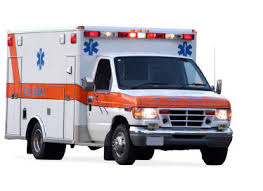
In this case though, it was a question of just driving over. By the time I arrived, the front desk had called an ambulance. I would describe the condition he was in when I walked in his front door, but the readership here is small enough and I’m not trying to scare more of you off. Suffice it to say that when an incontinent man falls while getting dressed and then crawls across the floor in extreme pain, it is not pretty. He looked up at me and said, “Peter, I need your help getting up.” I gently let him know that this was not going to happen and that an ambulance was on its way. It was obvious that he had a broken bone. The only question was how many, and how seriously.
A short time later, the Framingham firefighters and an ambulance arrived. (Brief rant: why do the firefighters need to come? There is no fire. The EMTs are trained paramedics. It feels like marketing.) Almost instantly my father ceased existing a human being with a story, a background and a soul. Instead he became “elderly-male-who-fell-and-probably-has-dementia-and-so-many-other-problems.” It happened almost immediately. As soon as the EMTs tried to ask him questions to gauge his mental acuity, but asked them into the ear where he doesn’t hear well, I knew what I would be spending the rest of my night, and probably October at least, guarding against. He had been transformed.
I too had been transformed. Usually I am a sandwich generation father and son, straddling the fine line between caring for an elderly parent and trying to be the best parent for my children I can be. Sometimes though, I need to be one or the other. This was one of those moments.
As they wheeled him out, I packed the belongings I thought he would need. iPad. Charger. Worn-out Sony headphones he likes so much. Clean pajamas. His favorite slippers (in hospitals you get those anti-slippery socks). Both pairs of glasses. Hearing aid and batteries. A few pictures. Then I followed the EMTs out, and to the hospital. Luckily, I’d had my first post Yom Kippur cup of coffee and was fueled up for a long night.
The Mail
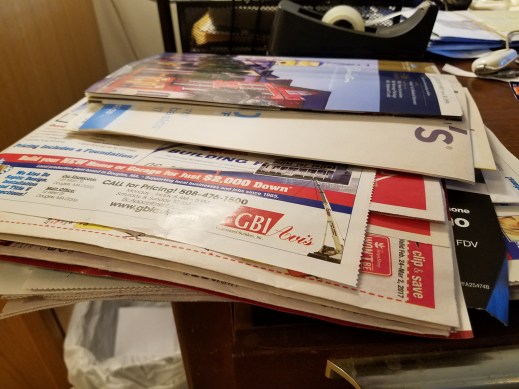
Ever wondered what an elderly person gets in the mail? I spend about 20 minutes a week going through my dad’s stuff, most of it junk. I never stopped until this past weekend to consider what actually is in there. Sorting the mail for both my parent, and occasionally for my kids, is part of the role of being a Sandwich Generation man.
The elderly have a special mix of mail that tells you a lot about American society, actually. So what kind of country are we? We are the kind of country that sends our oldest members:
- multiple envelopes from coupon aggregators (in his case, Valpak)
- statements and bills from supplemental health insurance and supplemental prescription drug benefits programs
- American Express solicitations (even though my father has a card)
- Invitations from social services agencies, sometimes in multiple languages (in his case, Jewish Family and Children’s Services, English and Russian respectively)
- Envelopes that say “Information about your plan’s home delivery pharmacy – Important Plan Information” – which åre solicitations to subscribe to new costly services
- Envelopes that say “Urgent information about your health plan’s benefits – Your Response is Required” – which is where they try to figure out if the bills they reluctantly paid can be pinned on another insurance company because of some kind of an accident
- Vacation solicitations from cruiselines
- Carter’s catalogs
- Local restaurant menus (The Sub-way and Pizza)
- Citi credit card solicitations – these guys send these to everyone
- More American Express solicitations
- Solicitations to take part in mailed surveys
- Coupons set designed to look like a newspapers
- GEICO solicitations that are sent to a loved one (in this case, my brother)
- Statements for services that were long ago canceled but I guess I didn’t cancel in triplicate. In his case, NJ EzPass.
- Yet another cruise line solicitation, this time from Norwegian Cruise Lines
- Notifications from companies like Remedy Partners, which is a third party that was the overall care manager during his hospital stay that they got money from Medicare for that. Which based on the level of coordination I saw, should be coming to me instead.
- Coupons and now hiring notifications from Domino’s Pizza / Now Hiring. That would be interesting
- A second Globe Direct mailing with home-related offers and coupons
- Official notifications of Medicare from what they approved and denied over the past 3 months. It’s actually somewhat useful, which as you can see, really surprises me.
Plus, my father received a jury summons.
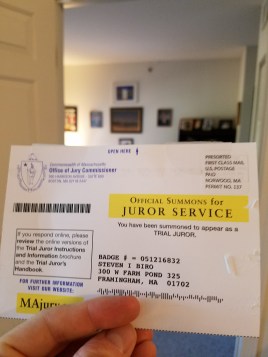
This one should be interesting! I’m sure there’s an exclusion for people who can’t quite get out of the house. I’ll work on that for him before more mail comes in…


 The Sandwiched Man
Recent Comments