The Consequences
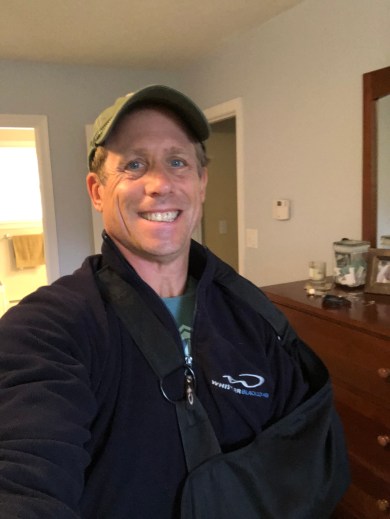
Well, it was bound to happen. I challenged the universe by writing a blog post about injuries you can’t see, and apparently the universe took offense. Thanks to an early morning bike-meets-pylon crash, I now have one that you can see: a separated shoulder.
I’ve been horizontal now most of the day, with some time to ponder, and mostly watch a lot of TV. Tomorrow when I have more energy and maybe less opioid medication flooding my bloodstream, I’ll think about which future posts might annoy the universe. This year especially for me, it is not messing around.
The Concussion

Over the summer, in the midst of the drama with my father’s failing health and faster-failing ability to censor himself, we had a true Sandwich Generation moment. My daughter Sophie, a swimmer who might be expected to experience less head trauma than her friends playing hockey or soccer, suffered a concussion. (Weather bitterness note: it was the end of July and a windy and cold morning; it’s New England, so there isn’t really a reliable season when you can guarantee a warm day.) The chilly wind was blowing the backstroke flags toward the wall, which caused Sophie to miscount her strokes at the finish. Her friend in the next lane had the same problem. However, this friend had her hair underneath her cap in a bun, which protected her when she came in a half-stroke sooner than expected and also bonked her head on the wall.
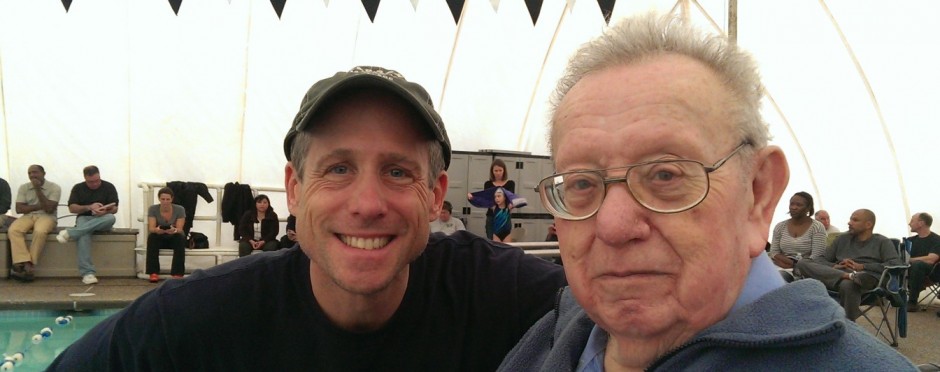
It’s the same race and pool that are in the picture actually; if I had known what was about to happen, I might have jumped in or tried to cushion the blow against the wall somehow. I know as the parent of a teenager that you are not supposed to protect them from all of life’s hardships. This one would have been an exception though.
The sound from the impact carried across the pool. When Sophie came over shortly afterward and told me that she couldn’t really remember the race, we knew what had happened.
This was a week before summer swim championships and the day we were supposed to leave for Italy. Naively we hoped that it would mild enough to clear before then. Not so. Here I am writing a blog post in the middle of October and it still with her, and with us.
Recovery from a concussion is an agonizing, slow and inconsistent process. It does not move in straight line. And it affects everything. Sophie’s in particular affects her vision and balance. It is hard to focus and hard to see perspectives shift. Concentration is a challenge. Nothing is obviously wrong with you physically; when I used to wear a cast, people knew my arm was broken. Sophie has no such physical manifestation, only a set of things she cannot do for fear of exacerbating the problem.
She is doing physical therapy to help her re-acclimate to the basics. Balance exercises standing in the pool. She lifts one leg, drops the other, first ten times with difficulty, then fifteen times with ease, then fifteen times twice, and so on. Peripheral vision exercises where looks at an object and rotates her head. Sometimes PT in the morning tires her out so much that by mid-day, she is barely hanging on.
A broken arm comes with a prescribed recovery time. A concussion comes with well-meaning guesses. You can take it easy and favor your healthy arm while the damaged one recovers. I’ve done it a few times myself and became a pretty accomplished one-handed stick shift driver, even in San Francisco which combines otherworldly hills with perpetually angry pedestrians who stare disapprovingly from the level ground of the crosswalk you are trying to reach to save your clutch.
With your brain, you cannot do it. It is one day at a time. And I know exactly how she feels.
It is perhaps unfair to compare the trauma of loss and my intense summer to the physical brain trauma from a concussion. I can stand the light, watch television, get through a TV show or a book, stare a screen long enough to bang out a blog post. From that perspective, I have it easy. On the other hand, she almost certainly will recover back to her old state and at age 14, surpass it. I know I cannot go back. The state I once occupied isn’t there anymore. I have to navigate somewhere new.
It is a slow and tortuous process, one in which the world is not slowing down to wait for me. Therapy is not a straight line. Sometimes it energizes me and I can feel progress, but most times, I leave shaking my head wondering how I am going to face the rest of my day. Sometimes I can’t but do anyway. Just like Sophie. Her positive attitude and sense of humor about the situation is an inspiration for days where I can’t find either.
Not often does your teenage daughter tell you something and you really, really get it. Sometimes we play cards together, and after a few games she has to stop because her brain hurts. Sometimes while we play I flash back to playing with my mother at our kitchen table and the cups of coffee we would share early in the morning. It is a reaction not so different from hers. So this time I think I do.
I hope she gets back to where she’s going, and I’m sure she will. I also hope she gets back there before I do. That feeling is part of being a parent, an element dearer to me now that I am no longer a son.
The Whole Foods Assist
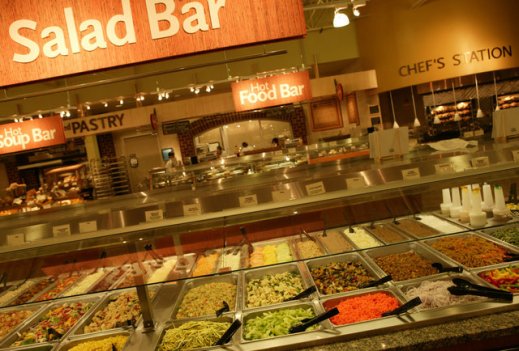
If you’ve been to Whole Foods, you know the virtuous-looking probably-made-from-recycled-material trays for the hot food bar. They come in two sizes: normal, of which there aren’t many, and giant, which is the size most of them are. If you fill them with items from the buffet — although Whole Foods is too snooty to call it that — you would pay about $12 or $18 respectively. They are brown and feel like corrugated paper, and they stick together.
I was fueling up at lunch today when I saw an old man with a cane trying to pull a tray from the “giant” stack. These things are thick and heavy and packed together tightly, so he was struggling. I put down my lunch and went over to help him out. Just a small thing that one does when one sees someone having trouble. Took me 10 seconds. He was grateful, and then I went to stand in line to check out.
Then I almost started to cry.
I used to do 100 things like that a day for my father on the weekends and after a while, I took them for granted. Aside from task lists that I’ve mentioned before, I would perform small acts that were nothing for me and probably saved him so much time and many reminders of his failing abilities. Picking something up off the floor he had just dropped, opening a soda bottle, adjusting the thermostat that I’m sure he couldn’t read anymore. The feeling at Whole Foods brought me back instantly to standing in his old apartment again, as if I’d never left. As if he’d never left.
Recently I have been feeling more myself, but the thing about losing someone is that you really don’t know when something is going to creep up on you like that. Over time, it happens less and less. I guess I am still a long way off.
Recovering is a strange process. You don’t really ever get back to the place you were, and for wherever it is you are going, it is not a straight line. It is hard to know how you’re doing too. I suppose it’s when small things like helping someone out at Whole Foods make you remember, and most of the time, you smile.
The File Folders
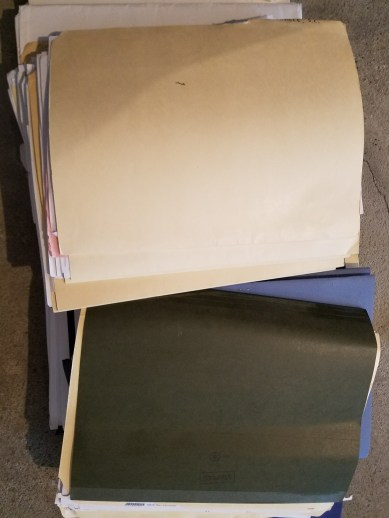
I did more clean-out of my dad’s stuff today. This afternoon was entitled “Make the Biro Garage Great Again”, otherwise known as reconfiguring where things were, starting to give some things away, and of course, starting to throw things out. Otherwise our cars will never fit in the garage again.
Right now, I am deconstructing much of what my brother, my family and I spent many years pulling together. Today: files easily thrown away. I am leaving the harder stuff for “Future Peter” to deal with. I’ll let him figure out what to do with the photo frames, stamp collections, postcards from friends long gone, old passports and plane tickets, and the presents my children constructed for him . Back in 2013 when he moved here, they made a beautiful little mirror for him. I sat with them that morning and picked the colors. What should I do with that?
With his Bank of America statements and copies of bills marked “Paid”, thank goodness, it is much easier. They go.
I remember the week that Rob and I spent in New Jersey in April of 2011 where I developed a system for him to get the bills paid. Rob focused on clearing stuff out of my parents’ house and I took all things financial. I sat with my father at what had been my mother’s desk. I demonstrated logging into online bill pay, keeping track of statements versus invoices, assuring cash in the account would cover the bills, identifying bills versus statements versus solicitations. I transferred everything onto credit cards that I could. It was a frantic and awful week — and that system worked for years.
This afternoon, I discarded the bulk of the product of it working for years.
There is more of this that awaits me. I also found a clock today that for the past 3 years sat on top of his bedside table. To find that exact clock took me a few tries. Then the one that I’d purchased broke after 6 months or so, but I didn’t realize for quite some time that the difficulty in setting the time and date was the clock, not me. Somewhere in the boxes in my garage is the other clock that he wanted atop the refrigerator. I remember sourcing that one too.
I wonder sometimes if I am cursed because the deconstruction reminds me of the construction. It is the same as a sandwich generation father; I remember the visits to Plaster Fun Time and the times Sophie and Lily worked all day to create artwork just for me. It makes me happy to have experienced that kind of unconditional love, and haunts me a little at the same time.
Creating those folders was my own version of unconditional love. I knew that I had to throw them out regardless. It is just the nature of things.
The Move Out

Long ago, in my childhood home while sitting across from me at the same desk he now has in the apartment I need to empty, my father told me the story of the start of his consulting business. He started confident. While employed in the mid 1960’s at Jerrold, engineers at many of the companies with whom he interacted would ask him if he’d be willing to consult for them. Jerrold was a top manufacturer of antenna equipment and my father a well-regarded engineer. In time, he grew to believe that these sincere offers proved that launching his one-man show would prompt an avalanche of business.
Once he left Jerrold – involuntarily – he decided to start out on his own. He named the company Biro Associates, dutifully printed up business cards and stationery, and phoned many of these people back to announce that he was ready to work with them. Suddenly the fast offers evaporated.
This is where he learned, the hard way, about the difference between the role and the man. That is, that people were talking to the engineer employed at Jerrold, and not actually to Steve Biro. He was merely the person occupying the job. Once he was on his own, things were different.
I know the feeling.
For a little while longer, I am still a little bit Sandwiched Man. Among the tasks related to my father that I still own is clearing out is his apartment. I am traveling, however, back with my family in Italy after flying back to Boston last week for the funeral after having been in Europe for only about 48 hours. What I need now is some actual help from one of the many people who said “if there’s anything you need, just ask.”
I am biased in this regard as the father of twins. When Sophie and Lily were infants, we fed them every 3 hours. 10am, 1pm, 4pm, 7pm, 10pm, 1am, 4am. Needless to say, we were perpetually exhausted and in a haze. But they were our only children, so we didn’t know any better.
We also didn’t know any better than to politely decline offers to help. We accepted all of them. Definitely don’t ask if there is “anything” they need. Because I can tell you: they need the laundry done. And they will ask, and mean it.
Fast forward to last week and an offer from a social worker if there was anything we needed, and in particular to help move things out of my father’s apartment while we were gone. It felt too good to be true, so Rob and I decided to test the proposition. We left her very detailed instructions via email on what should go where. The desk, the scooter and the power recliner to my home in Wellesley. The cable box back to Comcast if she had time, otherwise back to my house. Everything else to Goodwill. We sent photos, garage codes, and anything else she might need.
As the hours ticked by, we knew how this would end. Sure enough, an email from her appeared. My apologies, she said. I didn’t mean I would actually help you myself. I meant more that I could give you a contact with movers we know if you wanted. Would you still like that?
The moral of the story for caregivers and parents is this: although you will find many people who can help, you are responsible. Even if Nova and I had spent small fortune to hire night nurses for our kids for the 10pm, 1am and 4am’s, we would have had to manage them and handle emergencies anyway. For my father, I made difficult decisions many times that no one was going to make for me. It was lonely. And now that I am not in a position to steer caregiver dollars toward my father, I cannot help but notice that while offers of help are still abundant, actual help is more scarce.
That makes sense though. In the eyes of those I’ve worked with for some time now, I’m no longer caregiver-with-a-budget Peter Biro. I’m simply Peter Biro. A different person altogether.
Again, this doesn’t particularly surprise or disappoint me. I sort of expected it. I never forgot that lesson sitting at my dad’s desk from all of those years ago. My father got a lot wrong, but on this one, he knew.
The Eulogy
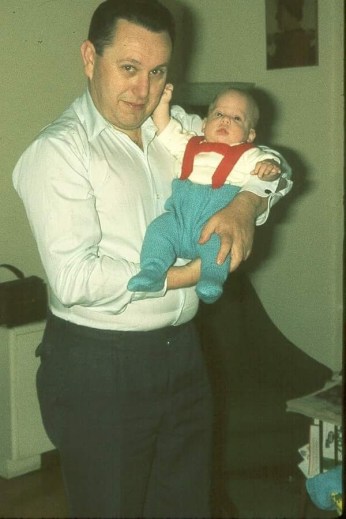
On Monday afternoon I was in Rome, crossing a bridge near the Piazza Cavour with Sophie to get lunch, and my phone rang. When I saw that it was Metrowest Hospital calling at about the time rounds start, I ignored the call. I wanted to hear from my brother instead that my father had passed away.
Even though we knew this moment would come, it still surprised me. Death came for my father many times and each time he turned it away. Of his forced labor battalion of 200 men from 1944, he was the last one left. He survived fleeing Hungary in 1956. In his 70’s, he beat colon cancer. Then 4 years ago, he fought off a deadly C-Diff infection. It was the first of a few times I would summon Robbie to board a plane, right now. My father was feverish, weak, on a collision course with major stomach surgery and 50/50 odds of surviving.
But there was no surgery. He beat that too. A week later he was cleared to eat again. I spread strawberry jam on toast, and fed it to him before they discharged him. I took a bite too. It was the best toast I had ever had. I smuggled in some Diet Coke for him to help wash it down. Always the Diet Coke.
The gift this gave me was 4 years of having him close by, and a second chance to know my father.
He taught me a lot when I was young. To love travel, any travel. We would drive the station wagon to no-frills vacations in destinations stapled onto one of his consulting projects in far-flung small towns: Gadsden, Alabama, Utica, New York, Houma, Louisiana. He taught me to play tennis by hitting balls with me in the street in front of our house. How to play ping-pong. I could never beat him until I finally developed a forehand down the line. It’s still my best shot. How to play chess. How to curse like a Hungarian with my idioms frozen in 1956. How to frame and take good pictures. How to ride a bike. How to drive. Just last week I backed out of a friend’s treacherous driveway flawlessly using his “only use the mirrors” technique. He taught me how to tip. This is because in the Early 1980’s Low-End Family Dining Hall of Fame, he is enshrined as Worst Tipper. I swore I would never do that.
I saw him weep every year at Yom Kippur when he thought of his father. And I knew his history. But I didn’t really know him. He didn’t tell me much about himself.
Let me say this: he was difficult. His head was filled with the ideas from his medium-sized town in Hungary in the 1930’s. He was stubborn. Sometimes he and I would have yelling matches about hygiene where I swore I could hear echoes of my mother calling him “primitive”. To him, everyone else – everyone — was stupid. I think the word he used most in his life was “idiot”.
He could be very selfish. I cared for him in his decline, where he relied on me so much and knew it. I can imagine how forceful and demanding he must have been for my mother when he was in his prime. I think I understand her a lot better now too.
Over our years together though, he softened. A short while after he moved to Massachusetts, we settled into a routine where I would come over on Sundays, handle a few things, and then sit with him at his desk, his big ugly awful 1960’s desk, and talk.
He loved talking to me. He told me so. Most of my life, I was certain that I had been a disappointment – an idiot – and suddenly all he really wanted was to sit with me, and talk.
He told me how much he missed my mother. One time he confessed that he would die just for one more chance to lay in bed and see her next to him. How he regretted being hard on her. How beautiful she looked on their wedding day. I had scanned all of his old pictures and slides, so he showed me and narrated many of them, including their honeymoon in Rome, and Lugano, and Venice.
He told me about his years living in Stockholm, and Cleveland, and Princeton, and how he came home after being fired for the zillionth time and announced that he was starting his own business. He taught me about entrepreneurship and hard work too.
2 years ago, I had told him I had been fired from a job I had been proud to get. He smiled, and responded that it was in the finest Biro family tradition.
He told me to send him pictures anytime I went away. I took a picture in Rome on Tuesday thinking about his honeymoon there, and how proud he would have been of how I had framed the shot.
He told me how much he looked forward to seeing Jodie and Megan every day on Skype, and how much he loved them. He would send me iPad screen shots of their calls, and tell me how proud he was of how they were growing up.
Sometimes I’d bring Five Guys for him for lunch – a single burger with just mustard – and he made sure to tell me every time how much he liked it.
He told me that much to his initial surprise, he was happy in his new home. He had made a life for himself and it was simple and it was good. He pioneered the Classical Music hour and used his iPad to email me articles he’d read from newspapers around the world.
He loosened up on money. He ordered room service every day, because the $6 delivery charge bought him the freedom to eat whenever he wanted. He procured a powered recliner from which he watched Megyn Kelly and too much Fox News on the big screen TV he also let himself buy. He treated my family to dinners at Legal Seafood.
In January, we watched Federer and Nadal in the Australian Open Final, just like we had watched Borg and McEnroe when I was a boy. I sat on his couch and had a beer – he insisted that I stock the fridge for myself because he wanted me to enjoy coming over. I sat with my father and it was simple and it was good.
He had a never-ending source of chocolate for Lily and Sophie. He always wanted to know what they were doing and watched every swim, dance, and home video I sent him.
He finally let me sign his credit card slips at Legal’s because he figured out that he didn’t know how to tip.
And he gave frequent presents to everyone who helped him. I know because it was my job to get the cash and the chocolate. Everything was my job. Now that he is gone, I will have to learn to visit CVS without buying extra Diet Coke, and to re-program my Sundays, and not to look for his political emails, and figure out where to put that big awful desk.
The great project of my life for the last 4 years has been being a Sandwich Generation father and son, and working with my brother and our families and an army of compassionate caregivers to give my father the illusion that he was truly independent. It was an amazing magic trick. And it worked.
He survived to see my daughters become B’Not Mitzvah last June. He wasn’t strong enough anymore to walk to the Torah so we brought the Torah to him. My brother and I held him up standing while he recited the blessings.
He survived hip replacement surgery last October. Of course he did. Then while recovering he determined that everyone at the rehab center was stupid. Of course he did.
He really only lost his independence about 6 weeks ago. These 6 weeks were very difficult for him. He was sick, and finally his body gave out. Plus, as he told me in one of our last real conversations, Megyn Kelly had left Fox News and her new show on NBC was terrible.
On Monday afternoon when Rob called to let me know that my Apu had died, I with was Sophie in a sandwich shop in Rome. I cried, hard. Then I pulled myself together and bought a Diet Coke. He would have appreciated that moment. He loved his children and grandchildren, and he loved Rome, and he loved his Diet Coke. And sitting with me at his desk on a Sunday afternoon, he would have told me.
The Normal Day
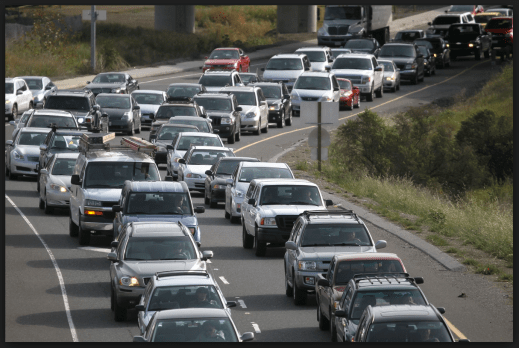
Yesterday I juggled a thousand things at work, made dinner, stayed up very late working on something for a client, dealt with huge commute delays thanks to Mass Pike construction in Boston that somehow is affecting every road in the area, dealt with a subscription problem, ran one of my kids back from swim practice, and dodged about 6 telemarketer calls on my cellphone.
In other words, a normal day. It was wonderful.
A long time ago I wrote a post called Invite the Cow In. The short version is that if you think your house is too small, let the cow live there for a while. When she leaves, your house will seem spacious again. I suspect every faith has a version of this story.
In my house, the cow is definitely in right now.
Yesterday was the kind of day that in the past would have caused me to fall onto my pillow, exhausted. Maybe it will again in the future. But I must say, having a normal Monday was pretty spectacular.
The Id and the Man
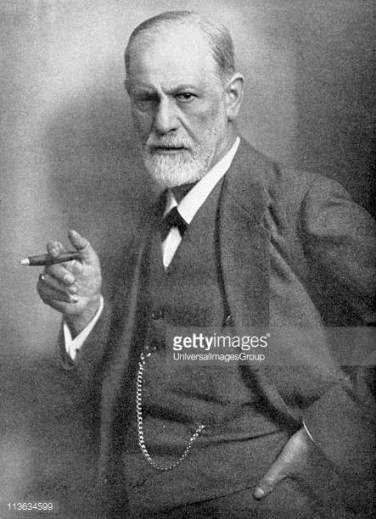
My father-in-law introduced me recently to the Freudian concept of the id, ego, and superego. If you are ready to skip the rest of this post already, I don’t blame you. I didn’t want to get into these concepts either. But based on my dad’s current state, and what just happened, they are really top of mind.
For psych majors out there, a word of warning: I am going to butcher this. Here goes anyway.
When we are born, we are all “id”. It’s all desire. Hunger, thirst, sleep, salt, touch. Later in life, this also includes sex. These are instinctive needs that underlie our will to live to ability to reproduce. In Judaism, this is “yetzer hara”, the evil impulse. It’s not evil per se; it’s what drives us to survive and without it, we would die. They are inseparable from us, part of the whole us.
But if human beings we all only followed these impulses, we would collapse into anarchy. So we have society, and society has rules. Different societies have different rules but many are similar. Thou shalt not kill, for example, is on one extreme. Don’t wear white after Labor Day, I would argue, is on the other. Now that I live in Wellesley, I get that not everyone would find these to be such polar opposites. These ideas are implanted in the “superego”, which is aware of society’s customs and norms.
Between what society says and what desire demands – desire never asks, it only demands – is the “ego”. The ego is the regulating force that understands when it’s time for sex and how to ask for it. It is the director of the play that decides which actors to bring on stage. Sometimes thirst is front and center and all else must cease while it has its moment in the spotlight. It is the ego that calls it onto the stage, lets it speak its lines, and then moves it off to the side. It is “yetzer hatov”, the good impulse, the part that understands that long-term love and commitment and good deeds also benefit the person demonstrating them.
It is said that as we age, we regress to what we were like when we were born. Independence starts at zero, then increases, then decreases again. So it is with my father right now. He is turning into all id, all an unquenchable and bottomless desire to get every need met at the instant he feels it. This is why he calls 20 times a day. It is why he refuses his medication; he is convinced that the people dispensing it to him are trying to kill him and his survival instinct is kicking in. Nowadays why when I don’t give him what he thinks he wants, exactly when he thinks he wants it, he will do or say anything to get it.
Hence the real purpose for this blog post. It is not about psychology. It is about the terrible things he says to me, how much I wish they didn’t hurt, and what I plan to do about it.
My father ordered an electric wheelchair on Amazon. Everyone told him not to: doctors, nurses, my brother and me, the director of the community where he lives, everyone. It was unanimous. He won’t be allowed to ride it around the halls anyway. He’s not safe to operate an electrical means of conveyance because he tends to fall asleep and doesn’t have the judgment to know whether he’s going too fast. But for him, ability to move around has reached “id” levels. So when it arrived, I asked the staff at Brookdale to send it back.
So he launched into a series of diatribes, including a long one about how I have been doing nothing but trying to steal from him. I had made a bank transfer into one of his accounts from another so that I could pay his bills, which it turns out was incontrovertible proof that I was siphoning off his money. I have made this same kind of transfer a thousand times. Didn’t matter.
Then he insisted that he has an attorney visiting tomorrow to take away my brother’s and my proxy powers. I don’t particularly enjoy making decisions like whether or not he should get an intubation tube if he has trouble breathing. Who would? But I am doing the best I can, and so is my brother.
This after a lovely morning where I organized for him with his hospice group to have a hot shower. I don’t know how much time he has left, and before it is too late, I wanted him to have the sensation of warm water rolling down his body. They needed me at one point so I helped lift him slowly while the nurses cleaned him off. I held him under his right arm and supported him and watched the beads of water run down his back.
And this after I had convinced myself that I could work from his apartment during the week and had rearranged his desk so that I could be there as often as possible. This way, when he woke up from his frequent naps, he would see me and know that he wasn’t alone.
Later I connected with the Executive Director, who is a prince of a man and has been so kind and supportive throughout the past difficult weeks. I wanted to let him know that I was concerned, and also that this same lawyer somehow had spoken with my father about suing their assisted living community. Apparently this scam is common and some unscrupulous attorneys reach out and find the vulnerable elderly to extract whatever legal fees they can before the end comes.
He could see how upset I was from how I was shaking. He has seen this movie and starred in it himself as the son of someone deteriorating into an angry id and not much more. He told me that it wasn’t really my father talking. I don’t know. I want to believe that. I want to believe that this is just id, not ego, not the man who most likely brought me into the world. I never thought I would write that sentence but I suppose it’s possible that he’s not really my father.
But it is also true that this version of the man isn’t really my father anyway. That man disappeared sometime in May or June and I never saw it happen. I fought hard to keep the universe from taking him from me, and while I wasn’t looking, it went ahead and reclaimed him anyway.
My time pondering this is almost done now; I convinced a relative to come visit him and she is on her way as I type. I realize in a moment of calm that It’s only his id and not the rest of him. I shouldn’t care about winning arguments with his id. Ids will fight to the death because they know nothing else. So really, the time for arguments is over. The time for winning is over. Now it is about honoring the man who was by dealing firmly but kindly with the man who still is.
The Time Shift

(deleted this by mistake – sorry for the repeat)…
Back in the days of visits to my father’s old apartment, we would have a pre-agreed upon time when I’d be arriving. Then circumstances would come up. I’d get Sandwiched Man type of responsibilities, or Route 9 would back up, or once in a while, I’d be attending something fun early on a Sunday afternoon and lose track of time. A few times I even got lost in a book. So instead of walking through my dad’s door at 2pm, it might be 2:30. Normally I am a pretty punctual person but Sundays would be particularly challenging for some reason. It happens.
Eventually he got used to this, even generous about it. It’s not like he had other pressing engagements and at one point, a thousand years ago now, he was just happy to see me and spend some time together. Because he didn’t have obligations anymore, he would refer to himself as the “time millionaire”, a reference to my once having had millions in stock options back in Silicon Valley in 1999 and 2000. That ended for me as it did for most people back then, so for years, I was his “ex-millionaire” son. I didn’t think it was as funny as he did. Such was the nature of many of his jokes.
Before that transition though, in his early years of being here, he would really lay into me for being even ten minutes late. He would tell me I was unreliable, for starters. I couldn’t be counted on. I won’t continue with the adjectives and invectives thrown my way. Suffice it to say that they got to a point where even I, who until recently didn’t realize the need for shields with respect to him, had to tell him that he couldn’t talk to me that way. Maybe that is a superpower I should have developed more quickly.
The irony is that now he has no sense of time whatsoever. He calls so often during the workday that I’ve had to block his number from hitting my cellphone directly; I always get the message quickly, but after multiple days with over 20 phone calls per day, sometimes 5 calls in under 10 minutes, I had to put those shields up too. Because he is sleeping so much, day and night have lost meaning for him. He called this morning at 4:30am, a frequent occurrence.
Time has changed for me too. People frequently use the expression “taking it one day at a time”. I know what this means now. I have to pace myself differently, slow things down, remember to conserve energy.
If you’ve been a caregiver, you know that conserving energy actually burns a lot of energy. Usually by the evenings, I am pretty tired from trying hard not to get tired.
Also, I am remembering the days I spent sitting with him at his desk instead of crouched over his bed. In those days, the biggest problem we’d have is that the YouTube classical music playlists that he created on his iPad hadn’t transferred correctly to his AppleTV. He would insist that I stock his refrigerator with beer so that I could have one while I sat with him for an hour or more and tell each other stories. Now he gets winded after less than 10 minutes.
I know that was only 2 months ago. But it feels like 4 years. I don’t know yet how to characterize the 4 years that we’ve been together. Ask me 4 years from now, I guess.
The last time shift is that our time together is finite now. I always knew it was true and never thought about this much before. It didn’t seem to matter. Now it pops into my head constantly, and I find myself trying to suppress it on most occasions. Too much to do and for all I know, it could be months. My father has cheated death so many times before that it’s hard to imagine that he won’t hold him off longer now than the doctors reasonably think he could. But sometimes I let myself drift a bit, and into thinking about what time must be like for him now, and into how to make to the most of it.
The Corner Stool

Recently after some of the tougher visits with my father, I’ve made a detour to my favorite go-to, which is Jack’s Abby in Framingham. It’s a beer hall with relentlessly knowledgeable serving staff, a huge and newly outfitted brewery, better-than-passable bar food, and most importantly, a long bar with plenty of stools. Yesterday my family was away in Maine, so rather than come back to an empty house, I detoured there instead.
Jack’s Abby mostly makes lagers; I discovered them about 3 years ago and they’ve been my go-to beer pretty much ever since. They moved to a downtown Framingham location about 2 years ago from a more remote outpost, and although I’d been there a few times since they opened, I didn’t realize how close they were to my dad’s place. I actually re-discovered them during my dad’s most recent hospital stay at Metrowest hospital not far away. I didn’t realize how not far away it was until I looked up how to get there on Google Maps, only to discover that the brew hall was 0.2 miles away. Less than 1,000 feet actually. How did I not realize that before?
Pathetic.
Anyway, I arrived and the place was mobbed. There were no seats at the bar. Then I looked again and noticed a lone barstool jammed in a corner between 2 couples. Ordinarily I am not that guy. Nowadays I am feeling less constrained by those kinds of social norms – so I went for it. I jammed into the corner and asked them all to move so that I could have the spot. One couple thought it was pretty funny. The other displayed a reaction that can be described best as more typical in Massachusetts than in states where people have a sense of humor. Just to tweak them further, I took a selfie.
I sat for about a half hour and had 2 half pints, one of the spicier version of their dark lager, and one of the fruitier version of their hoppy lager. They were good – the beers there usually are, even the ones that are experiments. But really what I had was time alone without actually having to be alone. Anonymity in crowds is one of my go-to comforts. I paid $20 for those 2 drinks and a salad; what that $20 really bought me was a transition from being by my father’s bedside to pivoting back to my regular environment.
I am interested in brewing so I talked to the eager bartenders, who never seem to be the same people twice, about what’s coming next and why certain things get brewed at certain times of year and what day parts are busy and whether those 2 people across the bar are on as awkward of a first date as it seemed and if the Sirius station is going to play any song by Tears for Fears, why “Head Over Heels?”. Really I just wanted to talk about anything besides hospice or the paperwork I had recently signed that no child ever wants to sign, but someday might be forced to.
Jack’s Abby has been very good to me in recent weeks – yes, the beer is good, but the corner barstool is especially good. I have my beer and a bite, let the din wash over my fears and return me to regular life, and then am on my way.


 The Sandwiched Man
Recent Comments