The Cast
The Roadblock

Last time in my series about my dad, I wrote about the wonderful nurse who took care of my father the night he was admitted to Leonard Morse Hospital in Natick after he broke his hip. Leonard Morse is tucked away on the short road from town to what residents euphemistically call “South Natick”, which is code for “Not Quite Wellesley”. I live in Wellesley, which is Not Quite Princeton, which is Not Quite Oxford, and so on. I don’t take this stuff very seriously – but people in South Natick do.
I had gone home for the night, expecting a long day tomorrow when they performed his surgery. His break was partial, meaning that the bone was broken and the socket was intact. A total break was the catalyst for my mother’s very rapid decline 6 years ago. Much more on this later. Suffice it to say that this injury is painful, debilitating, and takes a very strong will to overcome. My mother had many gifts, but after many years of unhappiness (and smoking), a strong will wasn’t among them. She lasted 3 weeks.
My father is different. Death has come for him many times, and each time, he has refused the invitation. I’m guessing that Death’s feeling pretty exasperated by now and wondering what he has to do to get this guy to go along with him already. My dad’s version what happened to her includes a strong sense of paranoia about how doctors and hospitals kill people — which they do — but also that she gave up. Already that night he told me that it was not going to happen to him and that after the surgery, he would work hard.
Partial hip replacements, even for the elderly, generally take a little over an hour and are not particularly dangerous procedures. My brother just had a full replacement and wasn’t even under general anesthesia. Leonard Morse, aside from anchoring the road to South Natick, is a hip replacement factory for the elderly who live in and around Metrowest Boston. Without Medicare, it would not exist. Because of Medicare, it is full to its 5th-floor brim with geriatric patients awaiting, undergoing, or recovering from surgery.
I thought my father would be in that 2nd category by the next afternoon and the 3rd category by evening, as we’d been told the night before by the attending the ER. I was wrong. Enter the cardiologist.
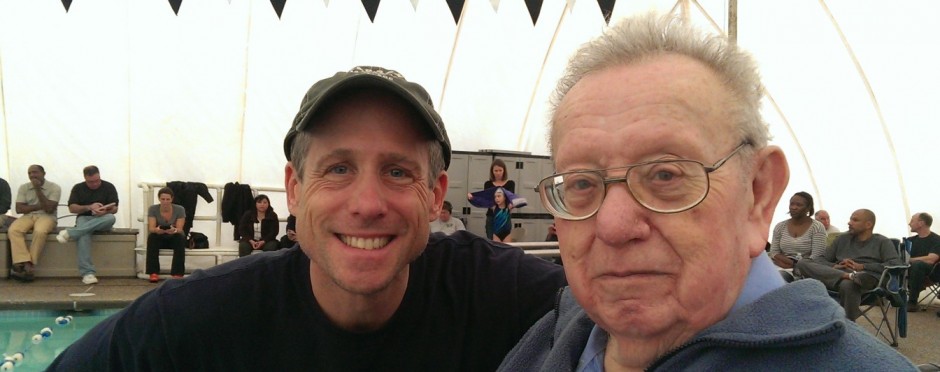
I got to know the cast of characters at the hospital a lot better than last time – that’s the next post in the series. Suffice it to say that the cardiologist who performed tests on my father came straight from central casting. His name was Dr. Rosen and he was a six-hundred year old man who stood about 3 feet tall and had a loud gravelly voice and won my father’s confidence instantly. Too bad because he is the one who turned a 72 hour hospital visit into a 2 week odyssey when he found that my father has an irregular heartbeat. On the monitor, I could see it occasionally fluctuate from its usual 75 up to 150, then back to 75, then down to 40, then back to 75, and so on.
That meant no surgery that day, and no definite answer on when it would happen.
From the instant Dr. Rosen noticed my father’s arrhythmia, he turned into the single person who controlled his fate and with it, my family’s. He spoke in complex medical jargon into my father’s bad ear, which I suspect is why he needed to be so loud. Cardiologists are risk averse and are the gatekeepers to actually being able to get any other procedure done. They have no incentive for your loved one ever to leave their watch — that could be dangerous! Also, they see heart problems everywhere in your life. Did you fall asleep once watching Fox News? It’s probably because your heart slowed down so we better run some more time-consuming and expensive tests. Also, you obviously are high risk so you need to stay in the ICU and not on the regular floor where you can at least look out the window and see whether it’s day or night.
Although fewer than one in four thousand Americans are in intensive care at any given time, they account for four per cent of national health-care costs. By my math on 16% of GDP going to health care, that’s almost 0.5% of our entire Gross Domestic Product. Put another way: that’s roughly the contribution to the economy from the state of New Mexico.
By the way, cardiologists round at irregular times, so if you want to wait and have a conversation with them, you’ve lost your whole morning. If you are a sandwich generation man juggling your parent and kids, or you have a job, or you expect the same level of courtesy that you would get at your local Jiffy Lube, you are out of luck.
The whole time my father was on the monitor in this brightly-lit but windowless room, he was trying to ask my him detailed information about his medical condition: doctors, medications, and other critical information that my father has never known. I know the answers, but somehow, he didn’t want to ask me; he preferred to make my father give him a mostly fictional or confused answer, maybe just so that he could observe that. To a cardiologist, or any doctor in the hospital, not knowing your medications cold is a sign of confusion and dementia. How could you not know? Medication is so important!
It is a unique Kafka-esque feature of hospitals that being in them contributes to the conditions that they then treat.
Also remember that my father hadn’t eaten the day before (Yom Kippur), or the night before (because he might have surgery the next day). So in addition to being weak because he had a broken hip and a lot of pain, he was in a disorienting place, hadn’t really slept because of the interminable blood pressure and other testing that woke him every hour, and was anxious about what was to come. It was all I could do to suggest humbly to Dr. Rosen that perhaps these factors might be contributing to his apparent confusion.
Time in the hospital loses meaning. It’s hours of waiting followed by 5-minute interactions with people who mostly have poor people skills, speak an incomprehensible language, and complete certainty in their point of view despite woefully incomplete information. Even the omniscient cardiologist.
So, now we had an indefinite wait ahead of us until my father would be stable enough for surgery. Was the arrhythmia new? Did it cause his fall? Would medication stabilize it? How long would that take? I didn’t know – but I had a sense of dread at the roadblocks that I knew now were coming.
The Gesture

I’m writing this from a place I’ve written before, a train working its way up the Northeast corridor. It’s a good spot to reflect. Right now, Sophie and I are somewhere in Connecticut. She is to my right, laboring away at studying for a science test, which in her world appears to consist of color-coded writing in a spiral notebook while eating M&M’s and listening to Ed Sheeran’s “Shape of You”. Based on what comes out 107.9FM in Boston these days, it could be a lot worse.
I wrote a couple of years ago about a weekend I had alone during a dance competition. Sophie doesn’t dance anymore though. Lily does, and she and Nova are grinding out a competition this weekend in Concord, New Hampshire. Months ago, Sophie and I sat at dinner at Border Cafe in Harvard Square and thought about this particular weekend, and what we should do with it. Even that dinner was fantastic; there is nothing like anticipating a weekend away with your daughter who you suspect in the future won’t be interested in such a weekend, let alone planning it.
It was a chilly fall evening and we were sitting outside. I think we both wanted to brave the elements because we could, and because we both knew the season was fleeting. It is New England after all. We were talking about flying somewhere that was a great food town, and given the evening, mostly picked spots that were warmer. Maybe New Orleans. We also tossed around Austin and Atlanta.
Weeks later, indoors, we landed on New York, which is how we ended up on this train today. For the past couple months since I bought the train tickets, I’ve thought ahead to spending a weekend in the city with my teenage daughter, the one who once fit between my elbow and my fingertips, who once looked at me with the earnest open eyes of a 10-month old and said “Gee” with a hard G. But as a sandwich generation man, I overlooked the many reasons that it would such an amazing couple of days together.
For one, I almost ceased to be sandwich generation this weekend. With some guilt, I admit that I didn’t check in with my father. That didn’t work so well on Yom Kippur but it was a luxury not to juggle that responsibility. I also didn’t check work, barely checked in with Nova and Lily, and didn’t touch base with my relatives who live in the city. It was just us.
It was wonderful. I got to focus in on this wonderful human being who is usually half of “Sophie and Lily”, or 1/3 of the women I live with every day. I could tell a dozen stories, but instead I have one that describes the weekend.
We are on top of the World Trade Center having finished the tour and looked at the city through all 360 degrees of the panoramic viewing area at the top. We are considering getting something to eat or drink so that we linger a little longer, and I notice a very classy and elegant bar area looking north toward the Empire State Building, Central Park, and beyond. Of course it faces that direction – it’s pretty spectacular, even on kind of a hazy day.
Sophie asks me if I want to stop there, and of course I do, how could I not – but instead I say, “No, it’s OK, we can get going.” She stops me and replies, “Come on Daddy, we should go in.”
It is a thoughtful and perceptive gesture, and takes me completely by surprise. I hesitate for just an instant, then agree, and so instead of leaving and thinking about what might have been, I walk with her over to the hostess stand.
The hostess leads us to the bar and we take our seats. We share a moment at the bar looking out the window, her with a raspberry mint concoction and me with a Sean Minor Cabernet. We sit and talk, not rushed. It is perfect. When Sophie was young, she would frequently be overstimulated and as a result, she learned to recognize impulses and emotions in herself. Now that ability to look inward manifests itself in awareness, and confidence, and sometimes, empathy t0ward others. I feel sometimes like I never ask to get to ask for what I really want, because I am sandwich generation and because I am my mother’s child. She somehow knows that about me, and doesn’t want me to miss out on something that she knows will be important to me.
Like I said about the gesture: perfect.
In case you are wondering: we achieved our goals of overeating this weekend. It was New York after all. We had dinner at Chelsea Market at Los Tacos Number One, dropping a mere $20 for amazing and fresh tacos for the 2 of us, and my favorite, re-imported Mexican Coke made with cane sugar and served in a glass bottle. Once upon a time that was a rare, hard-to-find treat and I’m therefore conditioned to say yes every time the chance presents itself. Our ‘dinner’ Friday night was frozen hot chocolate and berries and cream at Serendipity. Lunch at Eataly. Breakfast at Zucker’s bagels. Dim-sum in Flushing with our friends. We saw a musical and wandered Times Square in a chilly drizzle.
We also rode the subway incessantly, which she loved. She had the appreciation of an adult and the giddiness of a small child. Apparently there is something for a teenager about being trapped in car-centric suburbia, and suddenly being able to hop onto a train accessible within blocks of anywhere you’d like to go. Or at least my friend said during dim-sum. He is right, I’m sure.
I saved my Metrocard, and every museum brochure, and every receipt.
And yet — the gesture at the top of the World Trade Center is the one that I’ll remember. Freed of sandwich generation constraints, I had the space to recognize it. Thinking about it now, I can’t help but feel so much pride in having a small hand in bringing someone like that into the world, and shaping her a little. I don’t get to shape my father much.
Sitting there at the bar, she looked at me and asked me if we could do a trip like this again next year. There is only one thing you say when you get a question like that during a special weekend: yes.
The Nurse

As I mentioned in my first post in this series, my father had fallen and broken his hip. Much more on that later. First I want to talk about something I learned when he checked into Leonard Morse Hospital, which is this: many nurses don’t work for the hospitals where you see them.
Her name escapes me now, which I feel a little badly about – but then I suppose if you are a hospital administrator, that’s part of the point. You want them to be as interchangeable as possible. So, let’s call her Carmen. She looked like a Carmen, with dark hair, dark eyes, and olive skin. Although she was attending to my father in a hospital in Natick, Massachusetts, she was actually a 30-something temp who lived in South Florida and was part of a staffing agency. I was too jacked on adrenaline to ask her which agency, and truth be told, I was still absorbing the fact that a Massachusetts ER nurse would have been transported up for a 4 day shift from Florida.
She wasn’t unhappy about it. In fact, she had requested it because her boyfriend lives in Milton, only a 45 minute drive away. She gets up here every chance she gets. But from hearing her describe it, it is a challenging life. She is paid by the hour; if she’s not staffed somewhere, she’s not earning money. Often she is dropped into ER’s where she doesn’t know anyone and she’s gone before she has the chance to really try. And when she works, she is working. She is not checking social media, or shopping online, or catching up on work-related reading, or texting with her boyfriend. Even in an ER that isn’t that busy, Carmen isn’t walking around. She is running.
I was somewhat flabbergasted by the sheer amount of chasing people down that she had to do. Even in a mostly empty hospital on a Wednesday night, scheduling resources like an X-ray was extraordinarily complicated. Then getting my father up there was hard. Then we had to wait for the result, and of course, she is the only one who has any idea when the orthopedic gods from on high have deigned to gaze at the picture. I imagine her nightly labor is a little like my recurring dream like I am running in molasses, or am trying to move my arms but something I can’t see is pinning them. Carmen must feel like that all the time.
And yet – she was so wonderful with my father. He is 92 and therefore is simultaneously a bit cantankerous while also liking to flirt with and charm younger women. Which for him, is everyone. She did not treat him, as the system would so often over the next couple of months, as an “elderly-male-who-fell-and-probably-has-dementia-and-so-many-other-problems. Every doctor, and I mean every single one who saw him that night, did. Not her. She figured out that because he has a hearing aid, she should talk into that ear. She made sure he was comfortable. She held his hand while she talked to him. She delivered news the instant she could, and was selfless and apologetic when she couldn’t. Mostly, she delivered care. Not medication or testing. Care.
I’m guessing of the 3.1 million registered nurses in the U.S. – 3.1 million! – that hundreds of thousands of them are temps like Carmen, waiting to find out where they are going next. Then when they get there, they are the front line to sick, broken and scared people who are caught in the hospital system and looking for answers and care, genuine care, anywhere they can find it. The same was true for my daughtefsdfgsdfgrs when they were in the hospital with rotovirus just before they turned two; hospital supervision is a sandwich generation problem, for sure.
I wish I could remember Carmen’s name, or that we had a system where Carmens are not commodities. Imagine the care they could deliver if they weren’t running in molasses. But, obstacles or not, I’m glad she was there that night for my father, and for me.
The Master
Sometimes as a parent or caregiver, you get to enjoy the personal care task you’re asked to do. Reading a favorite story to your young child; I used to read “Fletcher and the Falling Leaves” to my kids night after night. I never got tired of it. Or, you realize that you have to be the one to do it. When my father ended up in the hospital almost 4 years ago with C-Diff and they wanted him to drink the barium-infused milky nightmare needed to make his bowels show on the x-ray, I drank some with him. It was chalky and sticky and faux-strawberry and all around just awful. But I drank it with him anyway so that he would do it. The universe had placed me in that spot at that exact moment for that exact purpose, and when the universe does that, you have to go along. It is the universe, after all.
And then there are the things that are not like that.
This came to mind the other day at my father’s apartment as I ran down the list of chores he had so thoughtfully prepared for me. The bills, of course. His latest iPad problem. Parceling out medication. Unpacking his Amazon shipments, including the never-ceasing supply of Depends. Changing the battery in his Apple TV remote and/or hearing aids and/or TV remote and/or other TV remote. Then there is my usual list, which includes airing the place out, checking for expired food (especially the food he leaves on the counter), throwing the plastic bags, cracker packages and Sweet N’Lo packets he is hoarding, and examining the state of his bed and other important pieces of furniture to make sure they are clean.
I have come not to mind most of these. Most things I do for my kids also fall into this category, which as a sandwich generation man, is fortunate. Or I am suppressing something, one or the other.
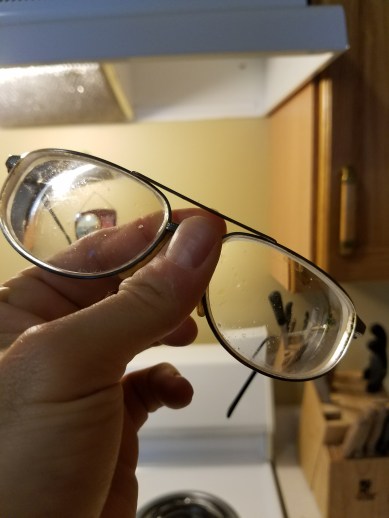
Then there are some chores that I die a little each time I do. To spare needless gory details, I won’t list them all. One is cutting his toenails. It is pretty obvious why I don’t like this one. Another, though, is cleaning his glasses.
I don’t know why this one bothers me so much, but it does. It would be pretty easy for him to do for himself, but he won’t. He has caregivers in and out of his apartment every day, and it would be easy enough for him to ask them. It’s common for elderly parents to cling to their children as the only ones who can do things for them, no matter how small. Especially those who lack an empathy gene. I’m just saying.
This past weekend I stopped to ask him why he insists that I have to be the one to clean his glasses. He stopped for a second to ponder it, and said, “Because you are the master. No one gets them as clean as you do.”
Well, maybe I am.
Then I took a deep breath, took out the Windex, and cleaned his glasses again. Both pairs.
The Magic Piano

This morning I padded downstairs and found my daughter Lily on the couch playing a game on her iPhone. She is 13 so this is pretty standard, maybe too standard. There is a balance at this age between encouraging escape and game playing, for which devices can be ideal, and too much screen time. Nova and I tell ourselves that we have found a decent balance. Maybe it’s even true.
Anyway, I made my way across the kitchen to make coffee. I am a firm believer on putting on your own oxygen mask before helping others with theirs, metaphorically, so usually I don’t interact much before the first latte has made its way into my system. Even if it’s decaf, part of it is the ritual. As I frothed the milk, I heard her playing “Magic Piano”, which is a game targeted at slightly younger kids that lets them tap the screen to “play” simple-sounding versions of popular songs. This morning it was songs from the La-La Land soundtrack. I started to browse the paper online.
Then, unexpectedly, she asked me if I wanted to sit with her and listen to her play.
Was it a breathtaking concert experience? No. But it actually was magic. I have to give Smule, who made the game, credit for naming it perfectly. I just sat and watched her. She played the first song (“Another Day of Sun”, which should have won the Oscar for best song by the way but somehow wasn’t even nominated). Then she pretended to take a bow before playing another (“City of Stars”, which shouldn’t have been nominated. It took Justin Hurwitz like 5 minutes to write that song.)
And then the moment was gone.
I share this anecdote as a Sandwich Generation parent mostly because it was so fleeting. It was fleeting because I am constantly in motion, ever moving, ever planning, and I was happily lost for those 3 short wonderful minutes. Because my daughter is 13 and she probably won’t be calling me ‘Daddy’ and asking me to come across the room to watch her play a game much longer. Because I remember being 13 and my father playing ping-pong with me in our garage on 95 degree summer days, afternoon and afternoon. I don’t think I gave him enough credit for that.
I write a lot about trials and tribulations, about technology as a survival aid, about being balanced on a knife’s edge between two extremes. Much of that is true. The fleeting glimpses are true too.
The Flashing Lights
Sometimes the smallest things remind you of where you’ve been, where you are, and where you’re going.
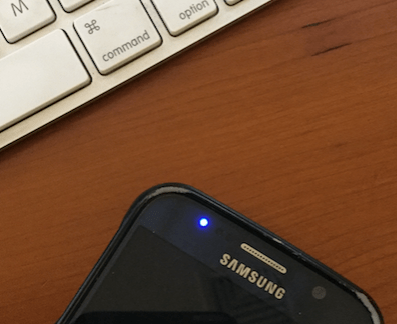
My phone has a light that flashes different colors based on what kind of alert I’m getting. Blue for most things, including text messages. Green for certain alerts, including Facebook. Yellow for notifications from different apps. Red for a charging battery. With one quick glance I know what kind of message I’m getting and whether or not I have to respond, without even seeing what it is.
It’s a rainy Sunday and before I left for my weekly visit with my father, I reached out to 2 friends whose situations I know all too well. One lost her mother 10 days ago after an unexpected and fast decline. She is in the part of mourning a parent where you just start to feel like you actually someday might feel like yourself again. You do a workout, take a trip to the mall, laugh with your kids at a TV show to gain a small shred of normalcy. Through your grief you look up and can see the surface of the water; while you are happy you can see it, it is so far away. I didn’t have her phone number, so I messaged her on Facebook. A green light if she responds.
Then I texted another friend who is at the start of moving a recalcitrant and newly compromised parent to Massachusetts from an unsold house in another state. She is in the part of becoming a caregiver where you are just trying to survive it. You haven’t had time yet to consider how much a part of the Sandwich Generation you are about to become, or that your reward for surviving the upcoming months of sprinting will be years of trudging ahead. You don’t have the time or inclination to look for the surface of the water. You are just trying to get boxes unpacked and keep your newly fragile parent from falling apart from the shock. A blue light if she responds.
On my way, I found myself at a red light, and looked down at my phone. Flashing blue. I disappeared in my head to a moment in 2013 just after my father had moved here. It is late on a fall Sunday afternoon and I am over at a friend’s house after dropping something off. He, his wife, and another couple – the same woman who is turning my phone’s light a flashing blue – are into their second bottle of cabernet laughing around the kitchen table about the previous night’s party. I feel a wave of isolation and jealousy wash over me as I instead am rushing over to my father’s place to deal with the latest disaster brought on by his never-ceasing C Diff attacks. They are preoccupied in their conversation and it hits me that I live in a different world from them, and that I can never go back.
I arrived at my father’s, unplugged my phone from the car charger. Flashing green. Now I am thinking about the cabinet full of the COPD medication my mother didn’t take. She never exercised, continued to sneak cigarettes for years after her quadruple bypass, drank endless cups of coffee to get up and swallowed valium to take the edge off. She too had a fast decline and I can’t help but wonder if it didn’t need to be so fast.
Blue. My uncooperative and cantankerous father is exiled from his post-hospital rehab center, so I have to scramble to move him back into the house long enough for my brother moves to move him to Massachusetts. Green. I completely fall apart when I see my kids for the first time after she’s gone. Blue. My brother has only 72 hours to extract my father from our childhood home and reduce lifetimes of memories into what he can fit into a moving van. Green. I climb into my car a week after my mother has passed away and try to muster the strength to drive back home to Boston from New Jersey. I don’t know if I can do it but I know I have to try.
Blue. My father is happy, healthy, and thriving at 92. Green. My mother escaped a long, slow decline, and my daughters have only sweet memories of her. Where I am today is very different from where I was. I am grateful.
Earlier this week I saw flashing lights of a different color in front of the house next door: red ones from a fire truck. They are coming more and more these days as my neighbor has given up her battle with brain cancer that she is about to lose. I have been blessed as my father has beaten one life-threatening condition after another. They remind me though that someday, somehow, his luck is going to run out, and with it, mine.
Sometimes the smallest things remind you of where you’ve been, where you are, and where you’re going.
The Treat
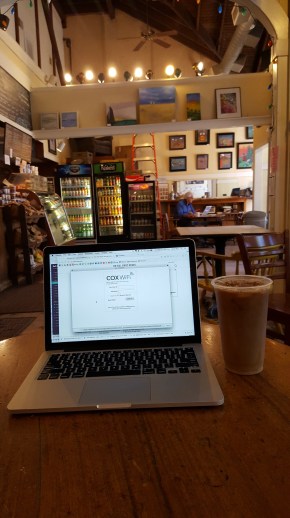
I am exercising moral license today. Or, in plain English: treating myself to a day playing hooky.
It’s a beautiful warm late September day in New England, which means that in about a week, the bottom will drop out and the high temperature will barely reach the high 50’s. But that’s a song for another time. Today, I ditched my responsibilities and jumped into my convertible for a day trip to the beach, top down.
I’m sitting in Coffee Obsession in Falmouth, one of my designated happy places, drinking an iced coffee tapping away happily at my keyboard while the locals filter through slowly. Often in long meetings or traffic jams when I let myself drift away, this is where I go. Sometimes it’s nice to actually go for real to the place you go in your mind. My next stop is Surf Drive beach, where I have nothing but headphones, a book (Positively Fifth Street), a beach chair, and a towel. Maybe I’ll get a Diet Coke too. That’s pretty much all I need.
Being here is sort of the height of irresponsibility. It’s Thursday, not Saturday. I don’t have any less to juggle than I did yesterday, and this is going to make tomorrow and next week more painful for sure. I’m still a Sandwich Generation father and son.
On occasion though, I give myself more leeway than I otherwise would for that, a gentle version of what social psychologists call moral license. In theory, it describes a subconscious phenomenon where increased security in one’s self-image tends to make people worry less about the consequences of subsequent behavior. It’s one reason that people who work out tend to drink more. In this case though, it is conscious. I know what the consequences are going to be, and I choose them anyway. They are a fair price to pay for a relaxed cup of coffee, a couple more hours in the sun, a drive or 2 with the top down under a beautiful blue sky. To live. Part of the sandwich generation experience is realizing as your kids grow, and parent ages, that life is short.
I’ve been told more than a few times, at different points in my life, to give myself a break. When I overachieved in high school. When I would make a bad financial decision. When I would beat myself up over work. When I felt stumped by something that was genuinely hard but tortured myself anyway. If you know me, you know that this is a tendency of mine and it is not my best quality. Far from it. In a strange way, being a some-time caregiver for my father has made me better at recognizing it, and occasion, combating it.
I suppose part of me has always wanted to treat myself better. It is strange to realize that my Sandwich Generation membership might be unlocking my ability to do it.
The Song for Another Time

At the risk of alienating more than a few readers, I have a disclosure to make: I am a huge country music fan. It’s true. It’s been almost 25 years now since someone played Mary Chapin Carpenter (who went to my high school, actually) for me and I was hooked.
One of my recent “songs on repeat” is from a band called Old Dominion. It’s called “A Song for Another Time”. It’s about a relationship which is great, but is going to end, and soon. The idea is that we should enjoy it now, and feel the sadness later. This is a common country music theme, I know. To make the cliche worse, as if it could get worse, the descriptions of how amazing things are, and how sad they will be, are just the titles of songs strung together. Brown-Eyed Girl. Sweet Caroline. Always on My Mind. I’m So Lonesome I Could Cry. You get the idea. Trust me: no one will be writing articles about this tune 50 years from now about how it changed music.
But I am hooked on this song anyway. It captures something in the way that only music can. Like many of you, I have lived almost this exact scenario in a relationship before. (As an aside — I could do a whole other blog on those moments in relationships, of all types, when you know it’s all going to change, either one way or the other. Comes down to only a few and they always stick with you.) And as a Sandwich Generation father, there are moments when I feel like I am living it now.
My daughters just turned 13 in June. I’ve been told by countless parents that the journey from here to 16 is fraught with peril. Occasionally I can see that future, but not today. Today my kids still think I am funny and smart, and mostly like being around me. We have fun together. They make just about anything I’m doing more fun. They still have some innocence and at the same time show flashes of wisdom that make me shake my head at how amazing they are going to be as women.
After the first day of school, I took Sophie to Five Guys and we just hung out and ate dinner together and talked about our days. It was simple, and sweet, and lovely.
My father too is in one of these phases where I recognize that things are about as good as they are going to get. There are more bad days than there used to be and some things that I do for him make me a die a little every time. I wish I didn’t feel that way, but I do. And yet I know the glass is still half full. Many blogs about caregiving are written by women, mostly older than I am, who are caring for very sick parents who need help with the basics, who can’t remember who they are, or are fighting terrible diseases. Much of my time as a Sandwich Generation son is spent just talking, or fixing modest technical issues with his iPad. Last Sunday afternoon we hung out and watched the US Open final, like we have for almost 40 years now. It makes me feel like a kid again and so happy that I still have my father. It was simple, and sweet, and lovely.
In the back of my mind, I know different days are ahead. The moments will come in those relationships when I know they are going to change. As the lyrics go, though – that’s a song for another time.
The Stuff Catalog
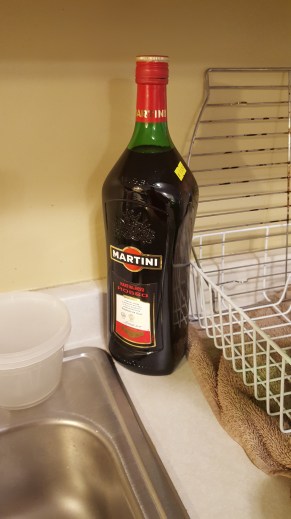
A brief departure from introspection to a discussion of some nuts and bolts. Specifically, for those of you embarking on the journey of caring for an elderly parent — whether or not you are sandwich generation — I thought it might be helpful to catalog some of the gadgets, devices and doohickeys that help make my father’s independence possible. Some of these were carefully considered and do perform the function that my brother and I hoped they would. Some are useful even though we didn’t expect it. And others… well, fails happen.
In no particular order…
Old Backup Hard Drive
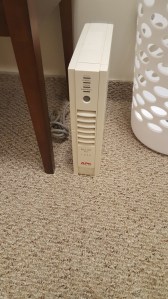
We have this stashed by the front door. It’s a refugee from the Rube Goldberg contraption IT setup my father once had. Useless in his iPad world, it makes a great doorstop.
Sony Wireless Headphones
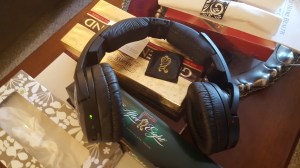
Because my father’s hearing is not the best (and never has been – see The Capital Letters for more on this), he used to blast the TV, with predictable results. These headphones connect to the back of the set and then project wirelessly. Everyone is happier.
“Lifeline” monitoring system
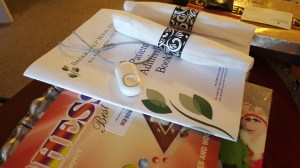
It’s typically assumed that the elderly need a “panic button” (a la, “I’ve fallen and I can’t get up.” My father has one that’s provided by his community. He never, ever wears it. Amazing for someone with such a strong survival instinct.
The Coffee Table
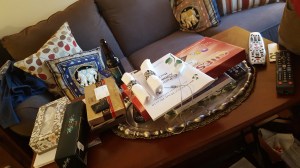
When he moved here 2 ½ years ago, my family and I went to local mega-chain Jordan’s Furniture to furnish his apartment. Literally every single thing we bought was wrong. Here is a really cool coffee table where the top pulls up to reveal storage inside. Totally unpractical. Other misses include the uncomfortable wooden chairs (because now you need a pad – and my father has incontinence issues) without arms (because he can’t stand without using his arms to lift himself), the nice-enough wooden table that he coated with stains and crumbs within 2 weeks and the small table lamps which he can’t operate.
Campari
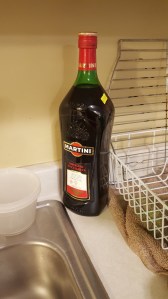
Somehow my dad discovered the pleasures of having a drink here and there. He’d never done this before. This is his go-to, roughly once a day. The apartment is always stocked.
Jack’s Abby Smoke and Dagger
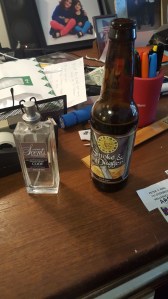
This is for me. Sometimes as a caregiver you need something to get you through your visits. Also notice the cologne next to my beer bottle – my dad uses this to mask his scent when necessary. It somewhat works. Somewhat.
Two-sided covered hamper
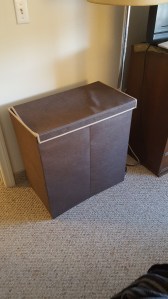
When you invest in your parent’s laundry needs, get the biggest hamper you can find and make sure it has a lid. The lid should be easy to open and easy to close so that it stays closed. Enough said there.
Grabbers

Buy more than one. This is the one that lives in my dad’s shower. On a side note: your parent is going to leave things in places and in conditions that you might not. This thing is metal and is always wet. That’s just life. Move on.
Batteries
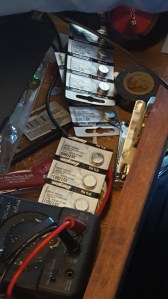
One of the great challenges for the elderly is changing batteries. (Another is figuring out how to make the cellphone work – that’s why my father doesn’t have one anymore. And what exactly does he need it for?) One reason the headphones are so great is that they charge on a stand. If you are a product designer and you think that people over 80 might be a target market, make sure that your product recharges. These are for his Apple TV remote; we have another set for his hearing aid.
Photo albums
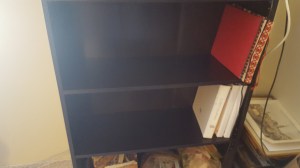
This empty shelf is where his photo albums used to be. We had them scanned at GoPhoto instead. They’ll take your photo albums and turn them into high quality electronic pictures (you know, the type we now take for granted because there’s always a high resolution camera in your pocket.) Now he can view pictures on his iPad and Apple TV, and share them. In an album, they’re hard to access.
The Hammer
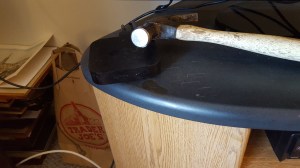
Sometimes he needs a hammer – but most often, it’s what keeps the tension from the network cables from pulling his AppleTV off the shelf. No uni-taskers.
Wireless Hub

My brother came up with this innovation. Since my father relies on the Internet for pretty much everything, and cable companies can’t distribute equipment that doesn’t need to be reset constantly, it had to be easy to do. More than 2 years in, we moved the cable modem to a shelf he could reach easily and tuned the unit so that the cables and power switch were in front instead of the back. File that under “Why didn’t we think of that earlier?” Caveat: this trick has a lifespan because eventually, an elderly parent won’t remember to how to use this, or won’t listen when you describe it to them. This recently happened and believe me, it sucks.
Obi (Voice over IP) box

Many posts ago (Top Tech Tips for the Sandwich Generation) I wrote about switching to Google Voice and an adapter so that we could use it with a regular phone. This way, we can get a copy of my dad’s voicemails, which occasionally include something from his doctor’s office that someone should respond to. My dad relies on home visits so scheduling them in critical. This is the adapter.
Dropcam

We have it pointed at the front door so that we can see his coming’s and going’s. No, we never just watch this (imagine C-Span without the excitement). But if he is getting into a taxi to meet us somewhere, now we know when he actually left. Also helpful for seeing when the aforementioned home medical visits really happened.
Schedule Board
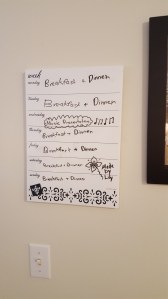
My daughter Lily wrote this schedule on here. I love seeing her handwriting (and flower – she’s always loved flowers) and remember how earnestly she wrote it. She’s always been so eager. Of course, that was 2 years ago because we don’t really use this. Not practical, especially for someone who doesn’t really use his kitchen table that much.
Glade Air Freshener
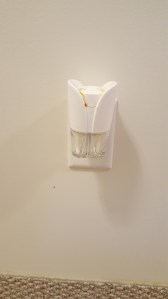
During the worst of our incontinence challenges, these were lifesavers, especially because my father doesn’t naturally open the windows. Now we use them less as they can be pretty overpowering. Sometimes that’s what you’re going for though.
Industrial-strength walker
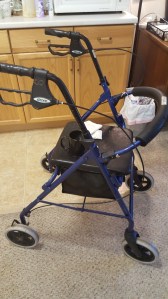
The picture sort of says it all – it also makes a handy surface for holding your most important stuff. It’s hard to fold and bulky but I think of all my father’s physical possessions, this might be the one that he’s most convinced he couldn’t live without. Even now that he has a scooter, it’s a security blanket for when he is out and about.
Kitchen armchair
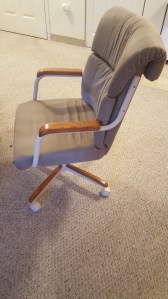
This is a new purchase – it’s meant to fix the problem we created by buying the wrong chairs the first time. My father has no power in his legs, so he has to rely on his arms to stand up. Close… but also wrong since the height is not adjustable. Find one that is. Now we have C-clamps on his kitchen table so that he can pull himself up instead of pushing off the table, which is close to breaking.
Coffee Maker
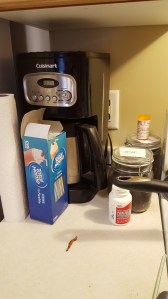
My father used to invite friends over for coffee, so we brought this up from New Jersey. Then I went to Dunkin and stocked him up so that he could do the same in Massachusetts. That’s the original coffee I bought more than 2 years ago. The jars have never been moved. Literally. I actually tried to remove the ‘decaf’ jar from the counter a few weeks ago and it’s become stuck to the counter somehow, so I couldn’t budge it. When we lose his security deposit someday, this will be why.
Panasonic Phone

Large buttons, high volume, loud ring and easy to use. Perfect. We bought 5 handsets (by his TV chair, on his desk, at the dining table, by his bedside and in the bathroom).
iPad
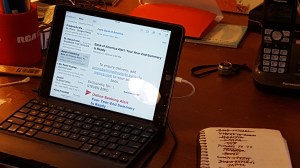
The essential tool for the connected elderly.
Lift chair

Maybe the best thing we ever bought him.
Toaster
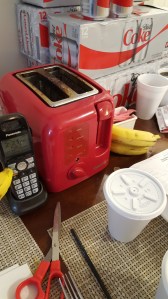
What’s not interesting about this is the toaster itself – it’s that he asked to have it on the same table where he eats. (Note: I know that’s “interesting”, not interesting.)
By the time he used to shuffle across the room from the kitchen, his toast would be cold. So while now there are crumbs in multiple places in the apartment – something else I’ve had to learn to get over – now he’s able to avoid this problem. He’s pretty proud of himself, and sometimes building confidence in your elderly parent is more important than the thing that made them feel that way.
Also notice the Diet Coke stash. If the world ever ends and Diet Coke becomes the currency of the apocalypse, my father is going to be a king.
Pill boxes

Everyone has these – we have 3. He loves having them now. I can’t believe he fought me about these at first. When your parent argues with about this, just ignore it and buy these anyway.


 The Sandwiched Man
Recent Comments