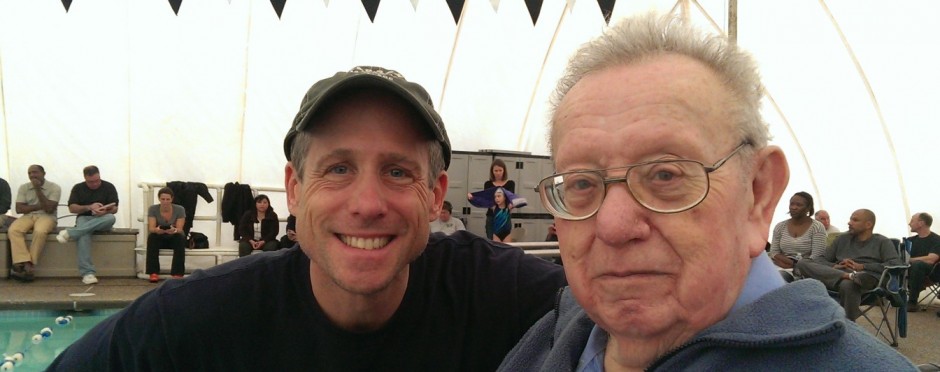
The Fall

For Yom Kippur every year, I taper off caffeine to avoid withdrawal headaches and irritability. Let’s face it — the day is tough enough already. I do this even though a part of me takes pride in my ability to harness it to keep up the pace of my life. It’s this part that has me start my early pre-workout 5:30am routine with an espresso shot, a device I use to coax myself to emerge from bed on freezing and dark freezing January mornings (and now March ones). The part that knows while water is healthier, coffee is tastier and acts faster. So, after giving in to that part of me most of the year, I need to ease back in the early fall. I switch from all caffeine, to about half-caf, to only a little, finally to almost zero.
The added upside is that caffeine turns out to be a close chemical cousin of Ritalin. So for a short time after the high holidays every year when my system is basically starting from zero, it clarifies my concentration and calms me. No, really.
At some point, I will give up this rite, along with fasting. Like I said, the day is tough enough already. This will be one of the privileges of getting older, I suppose.
For my father, however, abandoning Yom Kippur is not a privilege – it’s a challenge. He always wants to prove that he can do things his way even if they are exactly the opposite of what he should be doing. This DNA sequencing is part of why he is still alive at age 92, after all. So at age 92, he fasted this year. Why wouldn’t he? He is stubborn, my father.
Sometimes though, conventional wisdom actually is right. It was this time. He got weak, fell while reaching for something while getting dressed, bounced off the corner of his bed, crashed into the floor, and fractured his hip.
Some hours later, I was sitting on the couch after attending a break-the-fast party at a friend’s house and scanning my phone for the first time that day. It was about 9:30pm. The rest of my family was upstairs in bed already. By then, my father had been on the floor since 2pm. Although he has a “I’ve fallen and can’t get up” neck pendant that his community provides him, he didn’t wear it. As I said: stubborn. He also has a cord in the bathroom not 10 feet from where he fell that he could have pulled. That didn’t occur to him either.
But he also was too stubborn to just stay there. After 3 excruciating hours on the floor, he managed to crawl the 50 feet over to his desk so that he could reach his iPad to send an email for help. Then, somehow he pulled himself up high enough next to his desk to pull down his iPad and use it to start sending emails to my brother and me letting us know he was on the floor.
Several hours, and a phone call from my brother later, I saw the messages. As I mentioned in an earlier post about technology we’ve deployed for my dad, we have a camera deployed in his apartment that points to the front door. However, we can also see most of the apartment, including the area next to the desk. That was where I saw my father was laying face down when I checked it.
My father lives 15 minutes away in a community where there is plenty of help. I called the front desk there to let them know what had happened and to ask them to send someone upstairs. They did so right away, which is yet another reminder of why I’ve been so happy that my father doesn’t live in the house he insisted on staying in for years after my mother died. Sometimes I have anxiety dreams about trying to manage everything for him, but he still lives there.
In this case though, it was a question of just driving over. By the time I arrived, the front desk had called an ambulance. I would describe the condition he was in when I walked in his front door, but the readership here is small enough and I’m not trying to scare more of you off. Suffice it to say that when an incontinent man falls while getting dressed and then crawls across the floor in extreme pain, it is not pretty. He looked up at me and said, “Peter, I need your help getting up.” I gently let him know that this was not going to happen and that an ambulance was on its way. It was obvious that he had a broken bone. The only question was how many, and how seriously.
A short time later, the Framingham firefighters and an ambulance arrived. (Brief rant: why do the firefighters need to come? There is no fire. The EMTs are trained paramedics. It feels like marketing.) Almost instantly my father ceased existing a human being with a story, a background and a soul. Instead he became “elderly-male-who-fell-and-probably-has-dementia-and-so-many-other-problems.” It happened almost immediately. As soon as the EMTs tried to ask him questions to gauge his mental acuity, but asked them into the ear where he doesn’t hear well, I knew what I would be spending the rest of my night, and probably October at least, guarding against. He had been transformed.
I too had been transformed. Usually I am a sandwich generation father and son, straddling the fine line between caring for an elderly parent and trying to be the best parent for my children I can be. Sometimes though, I need to be one or the other. This was one of those moments.
As they wheeled him out, I packed the belongings I thought he would need. iPad. Charger. Worn-out Sony headphones he likes so much. Clean pajamas. His favorite slippers (in hospitals you get those anti-slippery socks). Both pairs of glasses. Hearing aid and batteries. A few pictures. Then I followed the EMTs out, and to the hospital. Luckily, I’d had my first post Yom Kippur cup of coffee and was fueled up for a long night.
The Magic Piano

This morning I padded downstairs and found my daughter Lily on the couch playing a game on her iPhone. She is 13 so this is pretty standard, maybe too standard. There is a balance at this age between encouraging escape and game playing, for which devices can be ideal, and too much screen time. Nova and I tell ourselves that we have found a decent balance. Maybe it’s even true.
Anyway, I made my way across the kitchen to make coffee. I am a firm believer on putting on your own oxygen mask before helping others with theirs, metaphorically, so usually I don’t interact much before the first latte has made its way into my system. Even if it’s decaf, part of it is the ritual. As I frothed the milk, I heard her playing “Magic Piano”, which is a game targeted at slightly younger kids that lets them tap the screen to “play” simple-sounding versions of popular songs. This morning it was songs from the La-La Land soundtrack. I started to browse the paper online.
Then, unexpectedly, she asked me if I wanted to sit with her and listen to her play.
Was it a breathtaking concert experience? No. But it actually was magic. I have to give Smule, who made the game, credit for naming it perfectly. I just sat and watched her. She played the first song (“Another Day of Sun”, which should have won the Oscar for best song by the way but somehow wasn’t even nominated). Then she pretended to take a bow before playing another (“City of Stars”, which shouldn’t have been nominated. It took Justin Hurwitz like 5 minutes to write that song.)
And then the moment was gone.
I share this anecdote as a Sandwich Generation parent mostly because it was so fleeting. It was fleeting because I am constantly in motion, ever moving, ever planning, and I was happily lost for those 3 short wonderful minutes. Because my daughter is 13 and she probably won’t be calling me ‘Daddy’ and asking me to come across the room to watch her play a game much longer. Because I remember being 13 and my father playing ping-pong with me in our garage on 95 degree summer days, afternoon and afternoon. I don’t think I gave him enough credit for that.
I write a lot about trials and tribulations, about technology as a survival aid, about being balanced on a knife’s edge between two extremes. Much of that is true. The fleeting glimpses are true too.
The Broken Hip

As I mentioned a couple of posts ago, my father fell and broke his hip back in October, and it was not an easy experience for him. Or, by extension, for me. Or, by extension as I am a Sandwich Generation father, for my family.
At times, it felt like too much was happening too quickly, too many thoughts entering my mind, and I couldn’t really keep up. It was series of intense times followed by waiting where I still couldn’t quiet my mind enough to write. Adrenaline and boredom. Highs and lows. Nervous energy alternated with a few drinks, occasionally more. I lost the ability to when I woke at 3am — middle-aged man problems, what can I say? — to fall asleep again. Morning after morning at 5:00am I would look at the clock and think about how I “only” had 90 minutes before I had to get up. I should have stopped looking at the clock — but I couldn’t. Then one morning I stood in front of the shower, thinking about whether I should get ready for work or do a short workout, and changed my mind 3 times.
I’m going to write a series of posts about this experience. Partially, maybe mostly, it is for me. Despite what WordPress tells me about my audience size, I suspect it’s a trick to keep people writing. I realize it’s actually quite a small circle of people, and that’s fine. I do this because I need to. I think one reason I had trouble sleeping, drank and ate more, and was particularly jittery, is that I fell out of the practice of writing.
This was my second time going through a hospitalization followed by rehab. Because it was the second time, I had expectations and knew what to look for. Maybe that threw me off more. I remember how it worked out last time and was results-focused rather process-focused. Or because the experience wasn’t new, I thought I would be able to absorb more psychological stimuli without being overwhelmed. I was wrong.
I have a table of contents built in my head and plan to write once a week. I have a narrative together and for me, this is the hard part without which I have trouble even starting. It’s probably going to be a few months at least, so for the hardy few of you who actually follow this, settle in. Also: I’ll publish posts not related to this story mid-week; I have a few of these saved up. My father is back home from having his hip replaced and his heart “paced”, and my kids continue to turn into teenage girls, so there is no shortage of sandwich generation moments that are good stories.
See you next week.
The Mail
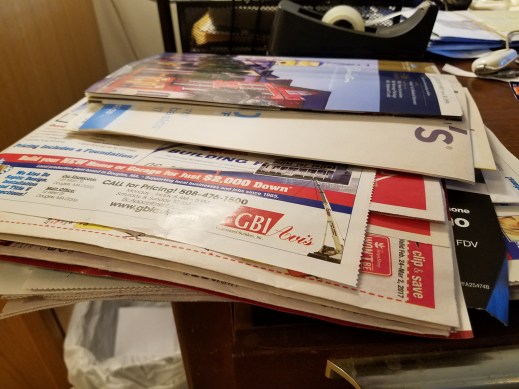
Ever wondered what an elderly person gets in the mail? I spend about 20 minutes a week going through my dad’s stuff, most of it junk. I never stopped until this past weekend to consider what actually is in there. Sorting the mail for both my parent, and occasionally for my kids, is part of the role of being a Sandwich Generation man.
The elderly have a special mix of mail that tells you a lot about American society, actually. So what kind of country are we? We are the kind of country that sends our oldest members:
- multiple envelopes from coupon aggregators (in his case, Valpak)
- statements and bills from supplemental health insurance and supplemental prescription drug benefits programs
- American Express solicitations (even though my father has a card)
- Invitations from social services agencies, sometimes in multiple languages (in his case, Jewish Family and Children’s Services, English and Russian respectively)
- Envelopes that say “Information about your plan’s home delivery pharmacy – Important Plan Information” – which åre solicitations to subscribe to new costly services
- Envelopes that say “Urgent information about your health plan’s benefits – Your Response is Required” – which is where they try to figure out if the bills they reluctantly paid can be pinned on another insurance company because of some kind of an accident
- Vacation solicitations from cruiselines
- Carter’s catalogs
- Local restaurant menus (The Sub-way and Pizza)
- Citi credit card solicitations – these guys send these to everyone
- More American Express solicitations
- Solicitations to take part in mailed surveys
- Coupons set designed to look like a newspapers
- GEICO solicitations that are sent to a loved one (in this case, my brother)
- Statements for services that were long ago canceled but I guess I didn’t cancel in triplicate. In his case, NJ EzPass.
- Yet another cruise line solicitation, this time from Norwegian Cruise Lines
- Notifications from companies like Remedy Partners, which is a third party that was the overall care manager during his hospital stay that they got money from Medicare for that. Which based on the level of coordination I saw, should be coming to me instead.
- Coupons and now hiring notifications from Domino’s Pizza / Now Hiring. That would be interesting
- A second Globe Direct mailing with home-related offers and coupons
- Official notifications of Medicare from what they approved and denied over the past 3 months. It’s actually somewhat useful, which as you can see, really surprises me.
Plus, my father received a jury summons.
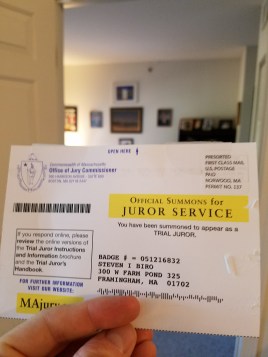
This one should be interesting! I’m sure there’s an exclusion for people who can’t quite get out of the house. I’ll work on that for him before more mail comes in…
The Flashing Lights
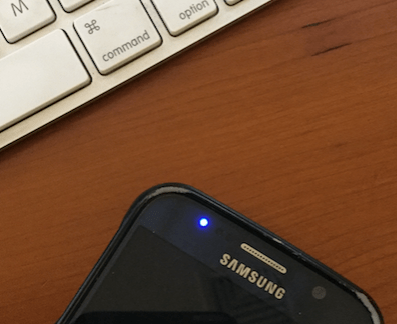
Sometimes the smallest things remind you of where you’ve been, where you are, and where you’re going.
My phone has a light that flashes different colors based on what kind of alert I’m getting. Blue for most things, including text messages. Green for certain alerts, including Facebook. Yellow for notifications from different apps. Red for a charging battery. With one quick glance I know what kind of message I’m getting and whether or not I have to respond, without even seeing what it is.
It’s a rainy Sunday and before I left for my weekly visit with my father, I reached out to 2 friends whose situations I know all too well. One lost her mother 10 days ago after an unexpected and fast decline. She is in the part of mourning a parent where you just start to feel like you actually someday might feel like yourself again. You do a workout, take a trip to the mall, laugh with your kids at a TV show to gain a small shred of normalcy. Through your grief you look up and can see the surface of the water; while you are happy you can see it, it is so far away. I didn’t have her phone number, so I messaged her on Facebook. A green light if she responds.
Then I texted another friend who is at the start of moving a recalcitrant and newly compromised parent to Massachusetts from an unsold house in another state. She is in the part of becoming a caregiver where you are just trying to survive it. You haven’t had time yet to consider how much a part of the Sandwich Generation you are about to become, or that your reward for surviving the upcoming months of sprinting will be years of trudging ahead. You don’t have the time or inclination to look for the surface of the water. You are just trying to get boxes unpacked and keep your newly fragile parent from falling apart from the shock. A blue light if she responds.
On my way, I found myself at a red light, and looked down at my phone. Flashing blue. I disappeared in my head to a moment in 2013 just after my father had moved here. It is late on a fall Sunday afternoon and I am over at a friend’s house after dropping something off. He, his wife, and another couple – the same woman who is turning my phone’s light a flashing blue – are into their second bottle of cabernet laughing around the kitchen table about the previous night’s party. I feel a wave of isolation and jealousy wash over me as I instead am rushing over to my father’s place to deal with the latest disaster brought on by his never-ceasing C Diff attacks. They are preoccupied in their conversation and it hits me that I live in a different world from them, and that I can never go back.
I arrived at my father’s, unplugged my phone from the car charger. Flashing green. Now I am thinking about the cabinet full of the COPD medication my mother didn’t take. She never exercised, continued to sneak cigarettes for years after her quadruple bypass, drank endless cups of coffee to get up and swallowed valium to take the edge off. She too had a fast decline and I can’t help but wonder if it didn’t need to be so fast.
Blue. My uncooperative and cantankerous father is exiled from his post-hospital rehab center, so I have to scramble to move him back into the house long enough for my brother moves to move him to Massachusetts. Green. I completely fall apart when I see my kids for the first time after she’s gone. Blue. My brother has only 72 hours to extract my father from our childhood home and reduce lifetimes of memories into what he can fit into a moving van. Green. I climb into my car a week after my mother has passed away and try to muster the strength to drive back home to Boston from New Jersey. I don’t know if I can do it but I know I have to try.
Blue. My father is happy, healthy, and thriving at 92. Green. My mother escaped a long, slow decline, and my daughters have only sweet memories of her. Where I am today is very different from where I was. I am grateful.
Earlier this week I saw flashing lights of a different color in front of the house next door: red ones from a fire truck. They are coming more and more these days as my neighbor has given up her battle with brain cancer that she is about to lose. I have been blessed as my father has beaten one life-threatening condition after another. They remind me though that someday, somehow, his luck is going to run out, and with it, mine.
Sometimes the smallest things remind you of where you’ve been, where you are, and where you’re going.
The Treat

I am exercising moral license today. Or, in plain English: treating myself to a day playing hooky.
It’s a beautiful warm late September day in New England, which means that in about a week, the bottom will drop out and the high temperature will barely reach the high 50’s. But that’s a song for another time. Today, I ditched my responsibilities and jumped into my convertible for a day trip to the beach, top down.
I’m sitting in Coffee Obsession in Falmouth, one of my designated happy places, drinking an iced coffee tapping away happily at my keyboard while the locals filter through slowly. Often in long meetings or traffic jams when I let myself drift away, this is where I go. Sometimes it’s nice to actually go for real to the place you go in your mind. My next stop is Surf Drive beach, where I have nothing but headphones, a book (Positively Fifth Street), a beach chair, and a towel. Maybe I’ll get a Diet Coke too. That’s pretty much all I need.
Being here is sort of the height of irresponsibility. It’s Thursday, not Saturday. I don’t have any less to juggle than I did yesterday, and this is going to make tomorrow and next week more painful for sure. I’m still a Sandwich Generation father and son.
On occasion though, I give myself more leeway than I otherwise would for that, a gentle version of what social psychologists call moral license. In theory, it describes a subconscious phenomenon where increased security in one’s self-image tends to make people worry less about the consequences of subsequent behavior. It’s one reason that people who work out tend to drink more. In this case though, it is conscious. I know what the consequences are going to be, and I choose them anyway. They are a fair price to pay for a relaxed cup of coffee, a couple more hours in the sun, a drive or 2 with the top down under a beautiful blue sky. To live. Part of the sandwich generation experience is realizing as your kids grow, and parent ages, that life is short.
I’ve been told more than a few times, at different points in my life, to give myself a break. When I overachieved in high school. When I would make a bad financial decision. When I would beat myself up over work. When I felt stumped by something that was genuinely hard but tortured myself anyway. If you know me, you know that this is a tendency of mine and it is not my best quality. Far from it. In a strange way, being a some-time caregiver for my father has made me better at recognizing it, and occasion, combating it.
I suppose part of me has always wanted to treat myself better. It is strange to realize that my Sandwich Generation membership might be unlocking my ability to do it.
The Song for Another Time
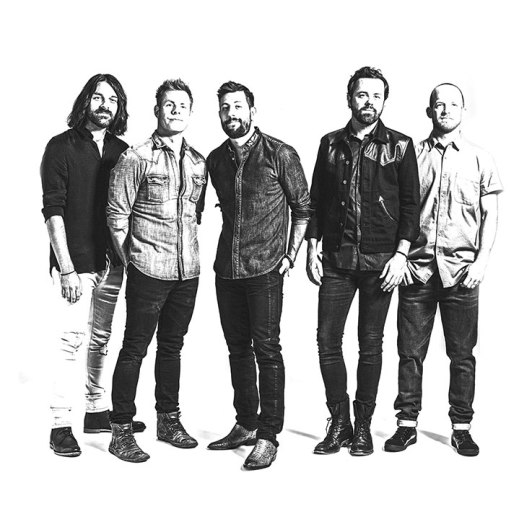
At the risk of alienating more than a few readers, I have a disclosure to make: I am a huge country music fan. It’s true. It’s been almost 25 years now since someone played Mary Chapin Carpenter (who went to my high school, actually) for me and I was hooked.
One of my recent “songs on repeat” is from a band called Old Dominion. It’s called “A Song for Another Time”. It’s about a relationship which is great, but is going to end, and soon. The idea is that we should enjoy it now, and feel the sadness later. This is a common country music theme, I know. To make the cliche worse, as if it could get worse, the descriptions of how amazing things are, and how sad they will be, are just the titles of songs strung together. Brown-Eyed Girl. Sweet Caroline. Always on My Mind. I’m So Lonesome I Could Cry. You get the idea. Trust me: no one will be writing articles about this tune 50 years from now about how it changed music.
But I am hooked on this song anyway. It captures something in the way that only music can. Like many of you, I have lived almost this exact scenario in a relationship before. (As an aside — I could do a whole other blog on those moments in relationships, of all types, when you know it’s all going to change, either one way or the other. Comes down to only a few and they always stick with you.) And as a Sandwich Generation father, there are moments when I feel like I am living it now.
My daughters just turned 13 in June. I’ve been told by countless parents that the journey from here to 16 is fraught with peril. Occasionally I can see that future, but not today. Today my kids still think I am funny and smart, and mostly like being around me. We have fun together. They make just about anything I’m doing more fun. They still have some innocence and at the same time show flashes of wisdom that make me shake my head at how amazing they are going to be as women.
After the first day of school, I took Sophie to Five Guys and we just hung out and ate dinner together and talked about our days. It was simple, and sweet, and lovely.
My father too is in one of these phases where I recognize that things are about as good as they are going to get. There are more bad days than there used to be and some things that I do for him make me a die a little every time. I wish I didn’t feel that way, but I do. And yet I know the glass is still half full. Many blogs about caregiving are written by women, mostly older than I am, who are caring for very sick parents who need help with the basics, who can’t remember who they are, or are fighting terrible diseases. Much of my time as a Sandwich Generation son is spent just talking, or fixing modest technical issues with his iPad. Last Sunday afternoon we hung out and watched the US Open final, like we have for almost 40 years now. It makes me feel like a kid again and so happy that I still have my father. It was simple, and sweet, and lovely.
In the back of my mind, I know different days are ahead. The moments will come in those relationships when I know they are going to change. As the lyrics go, though – that’s a song for another time.
The Scooter (Part 2)

Last week I wrote about having to embrace reality — the actual reality, not the one I had tried to create for myself — in buying a motorized scooter for my father. He seems to be enjoying it. It’s a mix of being liberated from being immobile and fulfilled by overcoming logistical challenges. How to open his door, and keep it open, so that he can exit his apartment. How to navigate entering and exiting the elevators. How to handle chance hallway meetings with other scooters. How to get back into his apartment. You get the idea.
For me, the best part of the scooter experience is that it’s over.
That is, when you have an elderly parent who orders something complicated, it is your responsibility to make it work. If you’re lucky, that is — because sometimes it also includes the responsibility to return it later.
My father, who is an Apple TV addict (more on this next week), decided he really wanted to upgrade to the very newest version. Apple decided to make the user interface and remote a lot more sophisticated, which I tried to tell him he didn’t want. He didn’t listen. So, I bought the new version and installed it for him, only to have him decide that he didn’t want it. Which I told him would happen.
That of course made it my responsibility to return it, which smacked right into Apple’s 14 day return policy. A 30 minute chat session later I convinced them to take the unit back, which earned me the right to box it off and drop it off for UPS. As a sandwich generation father, I am not drowning in free time, meaning that throughout the process I felt awash in resentment and frustration.
I thought of this episode during my third trip to get the scooter operational. For the first, I plugged in the charger, which seemed suspiciously quiet. For the second, I unfastened the seat and pulled off the motor cover so that I could attach the battery leads to the battery. Now the charger made a happy humming noise, so I felt pretty confident that the second time was the charm. The following morning, my father informed me that the unit wouldn’t move. Having read the directions, I knew that there was a simple lever he had to release.
But increasingly my father is not willing to listen to directions I give him, or get other people involved, or believe that someone else might have the answer. Instead he decided to send me a never-ending series of emails about how we might troubleshoot the problem. Finally on the third trip I found the lever — all the while ignoring his unhelpful kibitzing about calling the manufacturer and complaining — and released it. He looked at the fully functional scooter for a few seconds. Then, he progressed to move back to the rest of the list of to-do’s that he had compiled for me.
This lengthy narrative, I hope, sets up what I really want to write about: gratitude.
What makes times with my father so frustrating sometimes is that I feel a distinct lack of appreciation. Which, on its face, is pretty absurd. If the measure of success of being a parent or a caregiver were the count of “thank you’s”, we’d all have given up the effort a long time ago. And an act of kindness is cheapened by expecting praise for doing it. If selflessness is its own reward, by definition you can’t be thanked for it.
It is also absurd because recently he actually has been saying thank you. He has started to tell me that I picked a great place for him to live, which a year ago he attribute to luck. Only this weekend, he sent me an email that reads:
“Peterkem this weekend started on the wrong foot. As of today became a super weekend, thanks to you. Million thanks again, I am very proud of you”
Which in turn got me thinking about whether he doesn’t show appreciation, or I don’t absorb it. This happened with my kids’ B’not Mitzvah too. I likely drove them close to not appreciating the event by passive-aggressively demanding appreciation for the event. I looked for signs in their actions that would belie the thanks in their words.
Being a sandwich generation parent means that you get feedback from both sides, both spoken and unspoken. You have to look to the unspoken sometimes to understand what is really happening, whether in a developing child or an adapting parent. This reaction, at some level, is impossible to avoid. That doesn’t mean it’s always right. Sometimes you have to overlook the unspoken so that you really hear what’s actually being said.
The Scooter (Part 1)
I moved to New England in 2003, trading the mild Bay Area climate for April snow. Needless to say, I felt some bitterness about this as I’d fled the Northeast years before to avoid this kind of unnatural condition. In response, I did what many adult males do: deluded myself. Specifically, I pretended that having no solution for removing snow magically would prevent snow from appearing. That didn’t work. I passed a couple of winters shoveling Massachusetts snow the old-fashioned way, which did not put me in a better mood about the situation.
Then Nova turned me onto the idea of a gas-powered snow thrower. Her logic was pretty simple: I couldn’t change the weather by pretending it wasn’t bad, so I needed better equipment. I relented, and I admit it: it was probably the best $800 I ever spent. Firing up its engine requires flicking enough switches and pulling hard enough on a starter cord that I feel like I’ve gotten physical. I get to use a choke switch. Who doesn’t love a good choke switch? And it is marvelously loud. Sure it is effective at throwing snow a long distance, but after the other benefits, I almost don’t care. It has changed the way I look at snow. And since we’ve had some winters where the snow hasn’t stopped, I deserve something that can do that for me.
Here’s what this has to do with being a Sandwich Generation father.
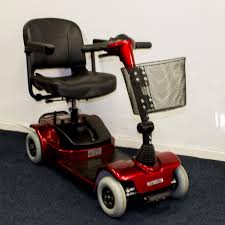
Over the past year, my father’s mobility has declined. It’s a fact. It’s to the point now where he shuffles his feet and not much happens. He has trouble turning. With a walker he can get himself down a hallway, but the clock is ticking on that as well. So about 3 months ago, he asked me to help him buy a motorized scooter to help him get around. Which I resisted. My logic was that once he started using a scooter, he wouldn’t be walking again, which itself would have downstream consequences that couldn’t be good.
I held onto this logic for some time. Like my pre snow-thrower delusion, I felt that I could hold back time a little longer. It’s like trying to wish away blizzards in Massachusetts; you might get lucky for a while, but eventually, the snow emergency is coming. And like that decision, it took someone else to point out that my logic was, in fact, delusional. Actually, this time it took 2 people.
But, in my defense (which is the opening phrase of most indefensible defenses), this is my father we’re talking about. We used to play tennis on the street where I grew up. He helped teach me to swim. He would lift heavy equipment onto his car’s roof as a core part of the way he made his living as a consulting cable TV engineer. I didn’t worship him for these things – we just didn’t have that kind of relationship – but I always knew he was especially strong.
When my mother passed away 5 years ago and I saw her laying there in the hospital, he was the one who kept me from falling over. He was 87. I’ve held onto that as proof that he can defy time, and maybe by extension, that I can too.
Then I thought about what the scooter what mean for him. Right now, he is trapped inside most of the time. With one, he’ll be able to spend a few days outside instead. He deserves to spend more time outside. He gave up his car more than a year ago, and a scooter will be a machine he can control. He deserves more things he can control. And most importantly, he appears to have found a potential girlfriend who lives far away (that is, in a different section of the community where he lives). For all his faults — more on this next time — he deserves to be happy, and I suppose this also means that he deserves a girlfriend.
These are all things that once pointed out to me were so obvious that I wondered what kind of daze I must have been in not to have seen them in the first place.
Do I do this with my children? I like to think I don’t. I don’t pretend that a lack of feminine hygiene products in the house is going to prevent my daughters’ bodies from changing. But then, as with the blind spot I wrote about before, I’m sure I have one here. I look forward to my next discussion on my back porch to discover what it is, and the particular Sandwich Generation delusion about my children that it is hiding.
The Dead Sea

We just came back from a family trip to Israel, where we spent a night and a day at the Dead Sea. If you’ve never been, the main attraction is the desert setting and water with salt content so high that you float like a cork. When laying on your back it’s quite relaxing, sort of like an especially soft waterbed except with the sun shining on your face. Actually, more like blazing on your face; the high temperature for our visit topped at 106 degrees.
This was Nova’s and my third visit. I won’t say we went reluctantly. But, having been there a couple of times, I remembered it as an old person’s destination. To be more specific, old people who tend to be Russian, overweight, wear banana hammock bathing suits, have hair growing from seemingly unusual places in their bodies, and move very, very slowly. Generally a scene I try to avoid if possible.
And generally I didn’t get the idea of a spa vacation before. Now I do.
First, I think of my father gradually slowing down. In particular, it’s harder for him to get vertical and get around. He’s not getting heavier but it must feel that way. For him, floating in the Dead Sea would be a miracle if I could somehow get him there. I’m sure he would love being weightless just one more time, able to leave gravity behind and just float after years of slow deterioration of his physical abilities. This can’t happen of course; the 11 hour flight home nearly destroyed me (although I did consume 4 movies), whereas I don’t think I could even get him to the airport. Now that I spend so much more time with him, I get the attraction of a place that is warm, slow, and rejuvenating.
The other factor is my shoulder. It’s doing better after I broke my humerus 2 months ago; I can even lift my arm over my head now. It’s the little things. Anyway, I can imagine dipping into a magic elixir that makes the soreness disappear even for just a couple of hours. That’s the Dead Sea for a lot of people. It’s probably psychological as much as physical. I get that too.
As a Sandwich Generation father, I was fortunate enough to be there with my kids. They didn’t remember the water’s sensation from their last visit so this was like the first time for them. They loved it. They floated on their backs, on their fronts, found ways to swim around, and managed not to splash salt water in their eyes. Last time they were not so lucky, and trust me, I don’t recommend it.
They also noticed the old men with strange hair reading their newspapers while floating in the Dead Sea. For them they were something of a curiosity, as they had been for me. For me now, they remind me of someone I know very well, and someone I realize I will someday become.


 The Sandwiched Man
Recent Comments