
The 6pm Dinner

When my father first moved up here 2 years ago from my childhood home in New Jersey, one feature of his community that my brother and I loved was the scheduled dinners with the same people. The idea was: it would force him to substitute his worn bathrobe for actual clothing, get some minimal exercise by walking down the halls. He’d have to interact with people in the elevator on the way. He would sit at a table with the same people with whom he’d inevitably becomes friends. He’d have to engage in conversation to keep him sharp. Plus we’d know he was eating well. As an added bonus, if he didn’t show up to dinner, they’d know and quickly figure out why. It seemed like a dream.
Mostly that’s because it was. That’s a system designed for Sandwich Generation fathers like me, not the actual people involved.
My father escaped this system by accident. Literally – his incontinence is what broke him free. Once his community’s director started indirectly referencing that “others” were complaining about his smell at meals, even the ones he hadn’t attended, his response was to stop coming and order dinner to his place instead.
Here’s what this means. Now, my father calls down at whatever time of day he feels like and has lunch and/or dinner delivered to his room. He gets room service every day! Every day! When I described it to my kids, it blew their minds because I’ve described hotel room service as a treat for special occasions. Sometimes he finishes the whole meal, but often, he sort of snacks on it all day. Which itself is healthier. He’s not that hungry late in the day so he orders earlier. Also healthier.
Thanks to his incontinence problem and his DVR, for the first time in 50 years he is also freed from the constraints of the clock. He might love this most of all.
We ate my childhood dinners at 6pm on the nose, with the dinner bell (yes, a dinner bell) at 5:58. My mother always blamed this rigidity on my father who expected things a certain way. But now I am learning that this (too) wasn’t exactly true. She was always one to complain about something, and blame it on someone else while all the while she had wanted to do it in the first place. So it was with our 6pm dinners, it turns out, because she wanted to watch the 6:23pm weather from the local Philadelphia station, the 6:26pm weather from New York, and then World News Tonight (first with Frank Reynolds and then Peter Jennings).
They did this every day. Apparently my father hated it. So being freed from the 6pm dinner seating at his place is another revelation that in hindsight is obvious.
Now he has freedom of his own schedule and his own place and his own meal choices and the safety net of Sandwich Generation sons who can understand that their notion of meals was all wrong. Well meaning, but all wrong.
The Senior Moment
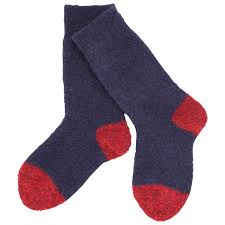

So Sophie bounds downstairs one morning last week, ponytail bouncing, and carrying a pair of underwear. She stops at the entrance to the kitchen and looks down at her hands as if in disbelief. Then she scrunches her face, and says “These aren’t socks. I meant to bring socks.” She turns around and heads back upstairs.
And in my mind I think: senior moment.
It was gratifying to seeing it happen to someone so young. Increasingly I find myself heading for the freezer and midway having to stop and remember what for. My father suffers from this almost less than I do; he has eliminated most clutter from his brain space so while (like the rest of us, let’s be honest) he repeats stories, usually he doesn’t find himself mid-stride without quite recalling why. And he remembers elements of his own childhood, and mine, with precision that’s almost startling. A few weeks ago I mentioned a childhood trip to the Outer Banks and he replied, “That was either 1973 or 1977.” He recounts details of his escape from Hungary almost 60 years ago like it just happened.
A while ago I wrote about feeling most times in this Sandwich Generation father experience that the glass half full. It’s true. The glass is half full any day when your 12 year-old daughter appears a little more forgetful than your 91 year-old father. Even more so when you make it to freezer without stopping to wonder why.
The Observation

Because it’s mid-Yom Kippur and I am in the part of the Sandwich Generation with only one parent, I am thinking about my mother today. Last night at services I looked to my right at my children and flashed briefly to just how much they’ve grown in the 4 years since she passed away. If she could observe them, she’d be proud of them. Maybe she would be a little proud of how I’ve done as a father with, let’s face it, no formal training whatsoever.
Over the choir’s chanting, I flashed to a recurring dream I’ve had over the past couple of years. I am a recurring anxiety dream kind of person. My usual standards are (a) I’m trying to make a plane but every step just seems to take a lot longer than usual, like I’m running in molasses, (b) I somehow didn’t study all semester and the test is in 24 hours or, another variation on this topic, (c) I’m back in business school and skipped most of last semester, so this semester I am really in trouble if I want to graduate. Oddly, I recently conquered (c); somehow mid-dream I’ve been remembering that Stanford was a zillion years ago and that this can’t be reality.
In this particular dream, I’m standing in the a dream-altered version of the kitchen of my childhood home. It is smaller, more cluttered (which you would not think possible if you ever visited my mom’s kitchen), the light a little more slanted and muted. My mother is alive. Her death turns out to have been a big medical mistake and she’s back. In the dream this is reality, not realization; as I walk into the house, I accept that this new version is just how things have been for some time now.
“Reality” also means that my father has moved back in with her into my childhood home and they have fallen back into the pattern where as a unit, she is caring for him.
I think I flashed to this because having pondered how proud my mother would be of her grandchildren, I know she would be amazed at my father. It’s hard to remember the days before he became a widower and in his late 80’s managed not only to survive but to carve out a life. But in the dream and last night in the synagogue, I realize that if she were still alive and could see it, it of course wouldn’t have happened. By observing it, she would change it. It’s the human application of the Heisenberg principle from physics: observing momentum at the atomic level alters it.
In the case of my parents, this maxim holds. My father told me a story a few weeks ago about a planned Alaskan cruise that they canceled abruptly the morning of their flight to Seattle because she suddenly didn’t feel well. Around and observing her constantly he didn’t divine what I surmised not long after she passed away: she spent the last several years of life struggling with illnesses, with anxiety, suffering in near silence. It was just like her to make you worry more about her more by telling you not to worry about her. Now, with distance, he recognizes that she must have spent weeks fearing having to let on to him that she wasn’t well enough to make that trip. Which then altered what happened.
As a caregiver, observation frequently leads to corrective action. It has to. As a parent, there is a balance is between observing our children’s reality and stepping in, no matter how good the intentions, to change it. Knowing when to do which is something for which, as previously mentioned, I did not receive formal training. I must have skipped that semester at Sandwich Generation dad class. Now as in my dream, I suppose I am in some trouble now as my daughters edge closer to adolesence. At least now I know to watch out for doing both at the same time.
The Moment

My brother and family visited from California last weekend. Traveling is challenging for them with a 6 year-old, a 3 year-old, a 6 hour flight and 3 time zones. But because my father lives here and is no longer mobile enough to travel, they make at least one journey east every year. This year the calendar page for September 13th said “Rosh Hashanah”, and thanks to a lucky series of sports scheduling and well-played tennis by Roger Federer and Novak Djokovic, it also marked the US Open men’s final.
When I was growing up, my father, brother and I would watch Wimbledon and the US Open religiously. My father would yell at the TV and criticize the players for all of the “stupid” things they were doing. It was a variation on a common theme in my house. Anyway, if I close my eyes I can imagine Borg and McEnroe when I was 10, or Steffi Graf and Martina Navratilova when I was 18, or 1996 Graf-Vicario final we watched in Atlanta while visiting my brother. And I remember watching the French Open with the 2 of them when my father was in the hospital in Princeton beating back post-colonoscopy complications when he beat colon cancer.
So in August this year, when I noticed how the calendars lined up, I started rooting for a #1 vs. #2 matchup at the US Open. And then the players in the rest of the draw acceded to my wish and it happened. It was as though destiny had one more epic tennis-watching session in store for the 3 of us. My kids, who I have indoctrinated into becoming Federer fans, were ready as well. My Sandwich Generation dad moment in front of the Flushing Meadow court.
Except that a rain delay pushed the match back from 4pm to almost 8pm, late enough that my father couldn’t watch with us, we had to serve dinner instead, and my kids were occupied with my nieces. It was a moment that was not to be.
I mention this because my kids have moved into pre-teen mode and I can hear the clock ticking down their last few days as willing inhabitants of our home. My father likely doesn’t have many US Open finals left in him. The moments I have together with them take on a fierce urgency, each opportunity feeling more precious than the ones before it. This is the benefit of mortality, I suppose. It forces you to appreciate and savor the glimmers you get.
This is one reason that, unlike my brother, I am not a frequent videographer. Maybe this is a mistake. My philosophy is that I would rather be in the moment than observing it, and I have learned about myself that I don’t do both well.
Most moments I have with my father now aren’t scripted calendar-aided events. Yes, my kids have their B’Not Mitzvah celebration coming up and with any luck he’ll be there. But I am thinking of the pauses amongst the list of chores I perform at his place when he stops, thinks, and begins a sentence with “You know, I never told you….” It’s not the notes that make the moments. It’s the empty spaces between them. The same goes for my kids. It’s the small remarks, the impromptu dances they choreograph, the stories they offhandedly tell us when we’re playing cards and everyone has their guard down. Those are the moments I already miss.
I checked with Google and learned that Rosh Hashanah 2016 is in early October, so there’s no US Open final during the holiday. Maybe it’s just as well. The 3 of us missed watching a pretty compelling final, but we’ll always have the 4th set tiebreak of the 1980 Wimbledon final. A great moment that, at the time, we didn’t see coming.
The Imperfection
When Bobbi Carducci of The Imperfect Caregiver asked me to contribute a post to her blog (where this entry also appears), I settled early on a topic that has been much on my mind recently. Then, suspecting it might send some readers running for the exits, I decided to check my instinct by asking my Facebook friends about particularly unappealing cocktail party discussion topics. Their list included pap smears, what sub-department of finance someone works in, minutiae-filled marathon training and post-run recovery rituals, CrossFit (described as the Amway coffee chat of the 21st century – by the way, Amway was on there too), someone’s latest airline travel delay nightmare, detailed hole-by-hole recounting of a round of golf, and fibromyalgia.
Included on this list, indirectly, was incontinence. Unfortunately, this is actually what I am writing about. But hang in there with me anyway.
My father is about as physically bulletproof as a 91 year-old can be. He is independent, sharp, strong, and mostly mobile. However, what he is not is able to do is control his bladder. It controls him. Back in 2002 when he weighed 50 pounds more than he does now, he had congestive heart failure, for which he was prescribed Lasix. If you don’t know what Furosemide (that’s the generic name) does, it’s a so-called loop diuretic, meaning it tricks your body into squeezing more water out of you. Kimberly-Clark, the company that makes the adult diapers Depends, should send their manufacturer royalty checks. Then he’s on Flomax (aka Tamsulosin), which relaxes enlarged prostates. In other words, it also eases the flow of urine.
Maybe Depends should be sending royalty checks to these guys as well.
Compounding the problem is that he is now only mostly mobile. So, reaching the bathroom when the urge strikes sometimes just takes too long. Who among us has not reached the bathroom with mere seconds to spare? He loses those seconds to slow movement. When you live in a community like he does, this causes complaints from other residents, which is a big headache.
His physically slowing down also affects the often-recommended solution of using Depends: he physically has trouble putting them on and taking them off. That assumes my brother and I could convince him to wear them, which we can’t. And honestly, I almost don’t want to succeed.
I’m oversharing about my father’s incontinence because I have to deal with it and at times, it dominates my discussions with him. With time to reflect, I realize how insane this is. He is a whole human being, a man in full, and this is an imperfection. This is a man who remembers stories about family members, friends and me, a history that will die when he does, and this is what I’m spending our time together talking about? How much to cut back his Lasix by? Whether or not to try out Oxytrol (a female hyperactive bladder medication) as a solution?
As caregivers, however, we frequently focus on the imperfections. They are the urgent we tend to rather than the important. It’s a peculiar byproduct of being in a caregiving position. Put another way: I have a good friend my age who has related issues, and I promise you, we have never discussed Oxytrol.
We also tend to obsess on the imperfections in how we provide care, whatever form that takes. As a Sandwich Generation father, I find often myself evaluating and second-guessing how I provide for, communicate with, and otherwise help raise my children. I even write an entire blog about it.
In the end, however, what matters is not the imperfections but the thing in full.
As I mentioned, I want to thank Bobbi for the chance to guest-write on her blog, the title of which I have a new appreciation for. Sometimes writing about imperfections in others and in ourselves, helps put them in the right perspective. I know it has for me.
The Four Stages of the Checkbook
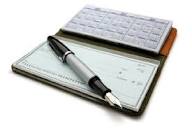

As Sandwich Generation dad, I serve many functions for my own father. Primary medication distributor. Friend and companion. Personal shopper. Dedicated email correspondent – he sends a lot of email, much of it about recently about why Fox News is right. (I try to tell him that Megyn Kelly being attractive doesn’t mean that the network is always right, but I’m losing that battle.) Pedicurist (not my favorite role). Main technical support guy – only yesterday I bought him a new iPad and Zagg keyboard as his old ones are grinding to a halt.
Among these, one of the most demanding and complex is being his CFO: bookkeeper, investment advisor, compliance officer, head lawyer, and insurance manager. In particular, I manage his money. This was not a straight path from Point A to Point B. In thinking about it, I realized that like grief, it meandered at its own pace through the same 4 stages: denial, anger, depression, acceptance.
Denial
In this phase, the adult parent pretends there is no problem. My mother had managed the finances (along with most everything else) in the house, so after she passed away, my father was confronted with how to keep the bills paid. Or, rather, my brother and I were confronted with it as he had just enough interest in the problem to let us solve it for him. Which we did by (a) automating everything in sight, (b) consolidating the almost 10 bank accounts into one, and (c) trying to fix a very confusing credit card situation. We also got passwords to everything – which if you haven’t done with your parent already, you should do now BEFORE you really need to. Trust me.
We also pulled his investments from the full-service broker who, based on the floor-to-ceiling envelopes stuffed with trade confirmations suggested, somehow had turned my mother into a day-trader. We moved them instead into nice, simple, boring index funds at Fidelity.
Anger
Next the parent says “I can do this myself – what the hell do I need these kids for?” For us this happened about 4 or 5 months later. He changes the online banking password so that you are locked out, pays his own bills for a while, and to prove that he is smarter than you, moves all the money to a full-service brokerage at the bank down the street. Then he tells you “what the hell did I need you for anyway?” Then he brags to your wife and your sister-in-law about what he did. True story.
Depression
In the next stage, the parent realizes just how much work managing everything is, and also starts to worry that he’ll run out of money because returns are terrible. Which, when you move everything back to a full-service full-fee broker at a bank who sells you the bank’s own proprietary full-load mutual funds, they are. This took us about 6 months where I just had to hope that he wasn’t making truly catastrophic mistakes.
Acceptance
The parent realizes you had their best interests at heart and asks you gently if you’d be willing to look just once at their situation. You know, just to check it. Then they quickly give you the passwords back and accept your help in re-consolidating, simplifying and moving everything back to Fidelity. Tip: do not point that this what you tried to do in the first place.
In case I didn’t emphasize it before, for all you Sandwich Generation parents out there, get visibility as soon as you possibly can. This often is best accomplished in conjunction with a health scare of some kind as parents do not yield this information easily. Also, money is one of the great taboo subjects in our society, especially true between parents and children. This article from AgingCare.com lays out some interesting strategies; another one is from the Wall Street Journal.
Whatever you do, remember that it is not a one and done situation. It takes 4 stages. If you’re lucky.
The Foxwoods Dilemma

Back in early April, I had a few days of freedom before starting my new job. Yes, I admit that I took one of those days to sit on the couch and re-watch the Usual Suspects for the eight hundredth time. For another of those days, I put together what I thought had been a masterful plan to get my father out of his Framingham apartment and take him to Foxwoods.
My parents were once minor-league VIPs at Atlantic City mainstays Hilton and Caesar’s. On a Friday afternoon, their friendly “host” would call them, invite them to a show, offer them a free room and vouchers for expensive restaurants (where of course no one actually paid, thereby making the price a fiction), and plan to meet them for dinner. These 2 people became like surrogate children to them while my brother and I were off living our lives far away. Looking back on it now, I wonder if having this on-demand contact with someone who doted on them wasn’t a big part of what they were buying. Because, trust me, they were buying it. I finally saw their tax returns after my mother died and I know how much money disappeared into the slot machines along Atlantic Avenue.
In the summer of 2012, a year after I’d seen those 1040s and realized why my father’s savings weren’t what they might otherwise have been, I went to visit him in Lawrenceville. I had just sold off a business that had really been struggling after sticking with it longer than any reasonable person would (although remember, I am an entrepreneur). Which is to say, I was relieved, exhausted, proud, sad, and hopeful all at the same time. Even though I had railed against the casinos many times, my father suggested, and I agreed, that we should visit Revel, which had just opened up. Into the car we climbed and off we went.
Watching my otherwise frugal father stuff $100 bills into slot machines was quite a shock to the system. So was seeing his incontinence on such stark display; the less said about that, the better. On the other hand, something about the lure of the gaming floor re-energized him and set back the clock 20 years, especially for his walking. We had a great dinner together that was a prelude to some of the meals we have now. He was proud: in his element, still living in the house he was convinced he could take care of, and educating his son over french fries about the systems for how to beat the slot machines. Revel is gone now, as are many of Atlantic City’s casinos, victims in part of the demographic shift as my parents’ generation stopped visiting and younger gamblers never came to take their place.
So six months ago, sitting on the couch watching Kaiser Soze emerge from the police station and climb into Kobayashi’s BMW, I looked forward to our Foxwoods trip as an adventure and a chance for my father to reclaim how he felt that day. I also used it as a prop to get him to walk more and, most importantly, be ready for a long day where bathrooms would be inaccessible.
However, when I showed up to his place, he was totally unprepared. And when I say unprepared, I mean he’d had an accident and nothing to protect his jeans from the result of it. For some reason, when I suggested he change his pants, he refused, and did so as if the situation we now found ourselves in was my fault. Trying to deflect blame back to me, he blurted out “You didn’t send me an email telling me when you were coming.” HIs suggesting that I am irresponsible is a classic manuever I remember well from childhood, so when I showed him on his iPad exactly when I had sent it, I was overcome by a wave of fury unique to adults whose parents to try undercut them in the same way they did decades ago.
I demanded he put on clean pants. He refused and dug in. I calmed down somewhat and reasoned that the problem might be that it was too much work to change his pants, so I offered to help him. He still refused. So, rather than spend my day trying to argue with him further, I called off the trip, and left.
So here I am six months later. Things have improved to the point where now when I show up, he is never, ever unprepared. He makes a point of wearing not just underwear, but adult diapers that prevent the kind of unfortunate accidents that I saw that morning back in April. This might seem like a needlessly intimate detail to share on a blog, and maybe it is. My point is that this is his small way of showing respect, and I appreciate it so much. I know that getting older inevitably comes with the body’s decline, and acknowledging this is probably accompanied by a loss of dignity. I am not going through this to the level he is, although middle age is where it starts to kick in (see: nighttime bathroom trips). So for him to do that, week after week, is a small gesture that I think speaks volumes.
In recent days, I have started to think that maybe another try at Foxwoods would be a fun adventure for him, and a nice gesture from me. But then part of me feels like I don’t want to mess with a good thing. Maybe the pressure of such a long excursion was too much for him. Maybe visiting a casino in Connecticut is just not the same as weekend getaways to Atlantic City with his wife, and that changes the equation.
Mostly, maybe sometimes the anticipation of something can remain better than the actual something itself. This is my Foxwoods Dilemma.
Bookmark This: A Big (Helpful) Medicare change
Bookmark This: A Big (Helpful) Medicare change
Short blurb on a change for Medicare reimbursing for services to maintain a patient’s level that would otherwise deteriorate. So, if my father (for example) is receiving doctor-prescribed services to keep him ambulatory, those are now covered; before, you had to have to lost something you were trying to regain. This is big and is going to save a ton of money in the long run since it’s going to keep people healthier, however you define that, longer, and therefore out of the hospital.
If Medicare should have one overarching strategic initiative, it should be to keep the elderly out of hospitals no matter what. Love it.
Plus, for the Sandwich Generation that is often the taxi of last resort, it’s going to give us additional months of time without the chauffeur’s hat. I wear it well — but maybe this will help some of the rest of you.
No Time for Selfies
A quick note on what “the real world” is.
It’s been noticed and commented on by many that everyone is taller, faster, funnier and cooler on social media than in real life. As the number of channels grows (Facebook, Twitter, Instagram, Google Plus, Pinterest for starters), it must be getting harder to build a #personalbrand. But that doesn’t mean that people aren’t trying.
And if you think this seems silly on an average day, you can imagine how I react to it on days when I am locked in sandwich generation or caregiver mode. Food porn selfies, videos of the great concert, car lust commentary, political rants to the echo chamber, absurd Top 10 lists, or nearly anything from the Huffington Post – it seems like another world entirely. For some reason, it makes me feel even more isolated than I do already. On the bad days (and yes, there are bad days), it’s almost insulting that people are taking time out to advertise themselves.
Do I know that this is irrational and ridiculous? Yes. But it’s how I feel sometimes, and if you can’t recognize and honor your own feelings on occasion, you will not last long emotionally in the caregiver game. Or the Sandwich Generation one.
I think this is especially true as a man, where you are often expected to advertise, publicly, that you are above feelings.
Not sure that’s going to make a worthy tweet. #ohwell
Invite the Cow In

Moo
As a sandwich generation man, I juggle competing priorities and events constantly. Usually, I am cognizant that this is actually a sign of good fortune. Sometimes it is easy to forget this, however. Then you forget for a couple of weeks in a row and start to long for a simpler existence. What if I could plan less? What if I could just work as long as I wanted and finally conquer my to-do lists? What if I could go away for the weekend with my wife and not have one eye on my cellphone?
There is a story in Judaism of a man who lives in a small house with his wife and many children. He is losing his mind with the noise and the crowded conditions. He consults his Rabbi to ask what he should do, and is told to invite his cow into the house. Not understanding why, he takes the advice anyway; such is the power of Rabbis in Jewish folklore. He does so, and now, of course, it is worse. Much worse (and don’t get him started on the smell). So then the Rabbi advises him to banish the cow. Suddenly, his previously unbearable cottage seems spacious, quiet, and more than enough home for everyone.
The emergency room is my cow.
Now that my father has emerged from his first Massachusetts hospital experience, I am looking forward to moving back into my cozy little cottage. We’ll resume our usual Thursday frozen pizza dinners. I’ll go back to being tech support on his iPad, and to reaching the light bulbs he can’t get to, and to expecting him late for everything. I’ll have my next Saturday morning spent in front of our weekly-meal-planning-whiteboard with Nova, figuring out how to squeeze in one more meal with her and our kids.
True, I didn’t really invite the cow into my home; it sort of barged in. But the same emotion applies: gratitude for the people I have inside the house and the hope I get to live here with them just a little while longer.


 The Sandwiched Man
Recent Comments